
Harpreet Brar: legendary Professional Hunter
Tanzania-based Professional Hunter Harpreet Brar traces a career that began with a pellet gun and the hunting stories he devoured as a teenager, and has since taken him deep into some of Africa's most remote game reserves. Writing for Fieldsports Journal, Brar reflects on fair-chase ethics, community conservation, and what it means to hand a way of life on to the next generation.
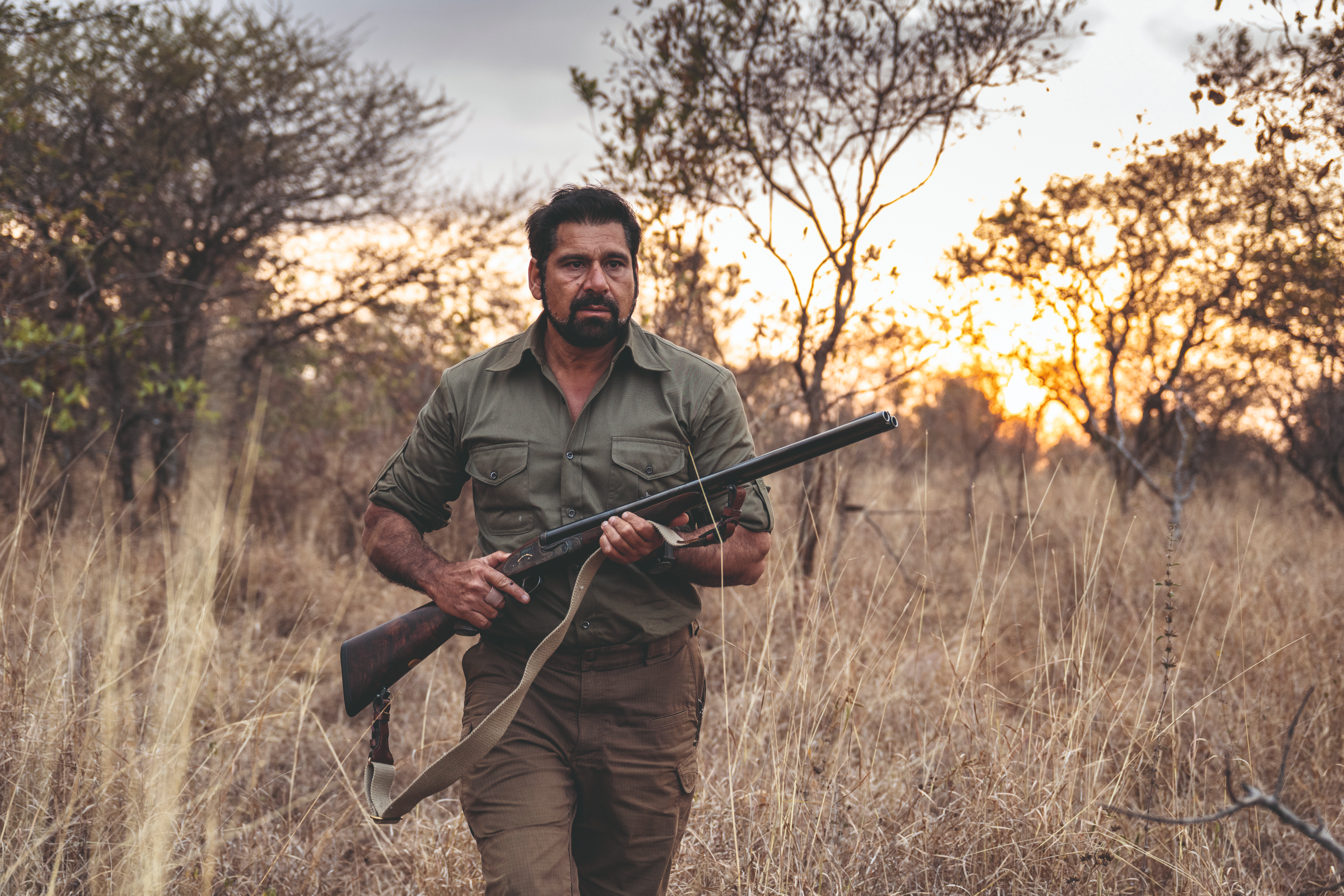

My love for hunting and the outdoors started when I was very young. My dad was what we would call a resident hunter – he used to go out and shoot for meat, but also just because he enjoyed it. That’s how I initially got into it. I remember at the beginning my dad got me a pellet gun, and I started hunting birds and then plains game such as impala and bushbuck. I also thoroughly enjoyed reading old African stories when I was in my early teens, including the biographies of hunting legends like Jim Sutherland. Those books really fired something up in me.
A career built on a childhood dream
One fellow I read about was a man called George Angelides, who has since passed away. He used to hunt in Tanzania, in an area called Rungwa, and was extremely well respected. I didn’t know then that I would eventually end up working for him, or that I would name my own company after that same piece of country. But that’s how it worked out.
When I finished high school I wanted to go straight into becoming a Professional Hunter, but my dad was against it. We finally came to a compromise: I would go overseas and get a university degree, and if I still wanted to do it when I got back, he would support me. So I went to the US and studied business and advertising for four years. When I got back, the bush was still calling, and although it took me a couple of years to find someone to do my apprenticeship with, I eventually did – with George Angelides himself. I got my PH licence in 1997 in Tanzania, and in 2000, when an opportunity arose, I started my own company. I named it after Rungwa, and I now have hunting blocks there.
Hunting Tanzania’s true wilderness
What I like to specialise in is hunting in truly wild areas – areas that right now look as they did at the turn of the 20th century. I have a Maasailand area which has some local communities in residence, but the rest of my areas are game reserves, which means nobody else is there. No fences. Totally wild. For me the areas that are really special, really close to my heart, are the game reserves, and Rungwa specifically, because it has a high population of lion and it’s a truly wild area. You can be driving and find elephant, then lion around the corner, then buffalo. And Maasailand is known for really big buffalo – the genetics of the area produce a high quantity of buffalo, and good quality buffalo.
Fair chase hunting the traditional way
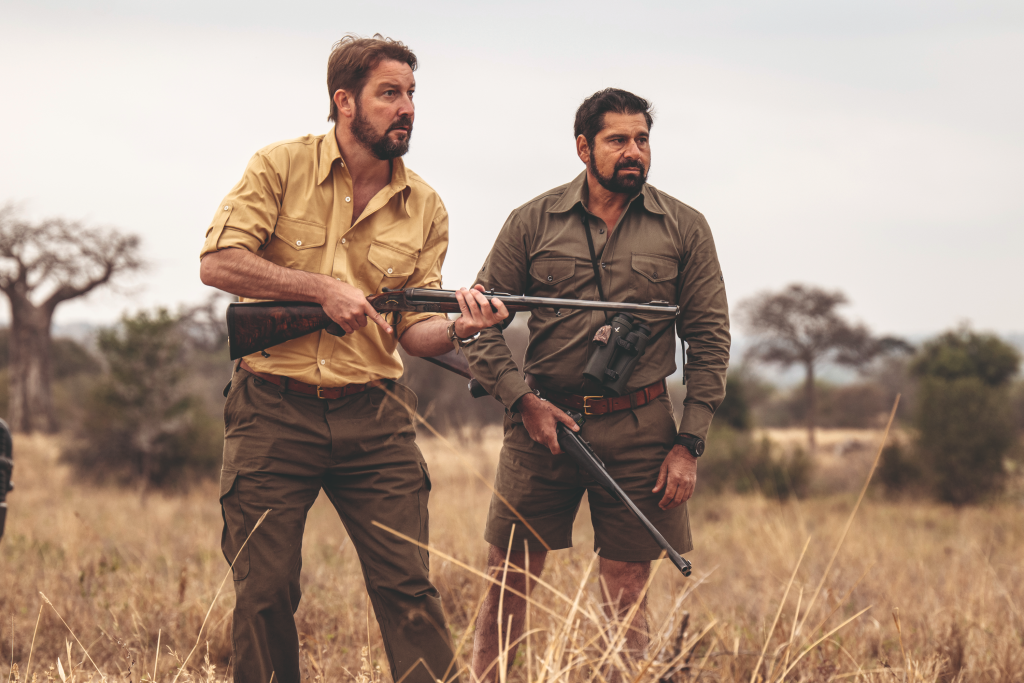
I do everything on foot, regardless of the hunt we are on. For some hunts, we’ll do a walk-in blind where you leave the car a kilometre out and walk in during the early morning when it’s still pitch black. This method is all about making sure the client can really experience the whole adventure. Even on buffalo, I try to get the animals as close as possible.
Conservation, communities and anti-poaching in Africa
As hunters in a modern world, we face many challenges. The population is really increasing in Africa, and with this comes more and more pressure on wild areas. In all of my areas we have full-time anti-poaching teams patrolling constantly, but at the same time we also do a lot of community development: building schools, and helping with the education of the next generation. In fact, we’ve just finished building a secondary school near one of my areas in Maasailand.
Hunting has an important role in this struggle for land. In Tanzania, hunting areas are protected due to the fact that they generate revenue for the communities and the government. Just to give you an example, in one area alone I employ 120 Maasai for whom there’s no other form of employment.
The case against hunting bans
Another challenge comes from those who promote nation-wide hunting bans in Africa. As hunters, we know that these kinds of policies don’t benefit the animals. A perfect example of the failure of hunting bans is Kenya, where hunting has been banned since 1977. They now have half the amount of game that we do in Tanzania, where hunting is permitted. As an example, Tanzania has the highest population of lion in Africa – we are home to no less than 40% of the world population.
Habitat management
Preserving habitats that benefit all of Tanzania’s wild animals is at the core of what we do. For example, one project which is ongoing – and is the work of a lifetime – is bush clearing, where we are trying to bring the habitat back to the way it was with more open grassland. Parts of Maasailand have been heavily overgrazed, and when the cattle move on the bush takes over. As a conservationist, this is bad news – we want these valleys to be open, because that’s where the best quality grass grows, and that’s what benefits your buffalo, your zebra, your wildebeest. I have a photo from 2012, when we started clearing, and you wouldn’t even recognise the place from what it looks like today.
Raising the next generation
It’s slow work but it’s the right work. I do it for the next generation. I look at my son Aaron; he’s only eight, but I can see he loves it. He sits in the back of the truck with the trackers and his ten-year-old cousin, and they both get involved in everything they can. I don’t even have to tell them what to do – they’re just part of the team. My son already knows how to skin an animal; he knows the names of the different species; and he knows how to roast a liver on the fire. Having a child really changes everything, because now you’re looking for their future instead of your own, and having Aaron with me puts a perspective on everything I do. He is, of course, also desperate for the Professional Hunter life. I tell him: school first, as my father did to me.
Why choose a hunting safari in Tanzania?
What would I tell anyone thinking about coming to Tanzania? It is the last true wilderness; the truest hunting experience. We prioritise fair chase, taking the right animal, and earning the right to take a shot. We have more game reserves, more protected areas, than any other country. At the same time, I set small quotas, because hunting is about quality, not volume.
At night, when back at camp, we treat our guests to five-star luxury and comfort, because that is our offering of hospitality. But when we leave to hunt, we are straight back into the wild – because to experience a hunt like the stories I read as a teenager, I want nothing but me, the animal, and the bush.
Frequently Asked Questions
What is a Professional Hunter (PH) in Africa?
A Professional Hunter is a licensed guide who leads clients on legal, regulated hunting safaris in Africa. In Tanzania, the licence is issued by the government and requires a formal apprenticeship under an existing PH. PHs are responsible for the safety of the hunt, compliance with quotas and regulations, and ensuring ethical, fair-chase hunting practices throughout.
Why is hunting considered a conservation tool in Tanzania?
Hunting concessions in Tanzania are protected because they generate revenue for local communities and the government – revenue that funds anti-poaching operations, community development and habitat management. Harpreet Brar’s areas employ full-time anti-poaching teams and have supported the construction of schools. Without that income, concession land would be vulnerable to agricultural encroachment and poaching.
What is fair-chase hunting?
Fair chase refers to hunting in which the animal has a genuine opportunity to escape – no fences, no baiting, no unfair advantage. For Harpreet Brar, this means conducting all hunts on foot and getting as close to the animal as possible before a shot is taken. It is the foundational ethic of traditional safari hunting and is central to how he runs his Tanzania operations.
Related Articles
People
'The science has to lead' – Nick Hesford on red grouse and the future of Scotland's uplands
Nick Hesford, Director of GWCT Scotland, writes about building a career that spans research, advisory work and field practice – and why evidence-based land management has never mattered more for the...
By Ben Palfreyman
People
Guy Grieve: master of reinvention
Guy Grieve is a multi-talented adventurer, entrepreneur, television presenter, author – and hunter. In our exclusive interview, he talks about his philosophy around shooting and fishing.
By Selena Barr
Get the latest news delivered direct to your door
Subscribe to Fieldsports Journal
Elevate your experience in the field with a subscription to Fieldsports Journal, the premium publication for passionate country sports enthusiasts. This bi-monthly journal delivers unparalleled coverage of game shooting, fishing and big game across the UK and beyond.
Each issue offers a stunning collection of in-depth features, expert opinions and world-class photography, all presented in a timeless yet contemporary design.
Save 16% on shop price when you subscribe, with a choice of packages that work for you. Choose from Print & Digital or Digital only with each journal delivered directly to your door or via the app every other month, plus access to past issues with the digital back issue library.