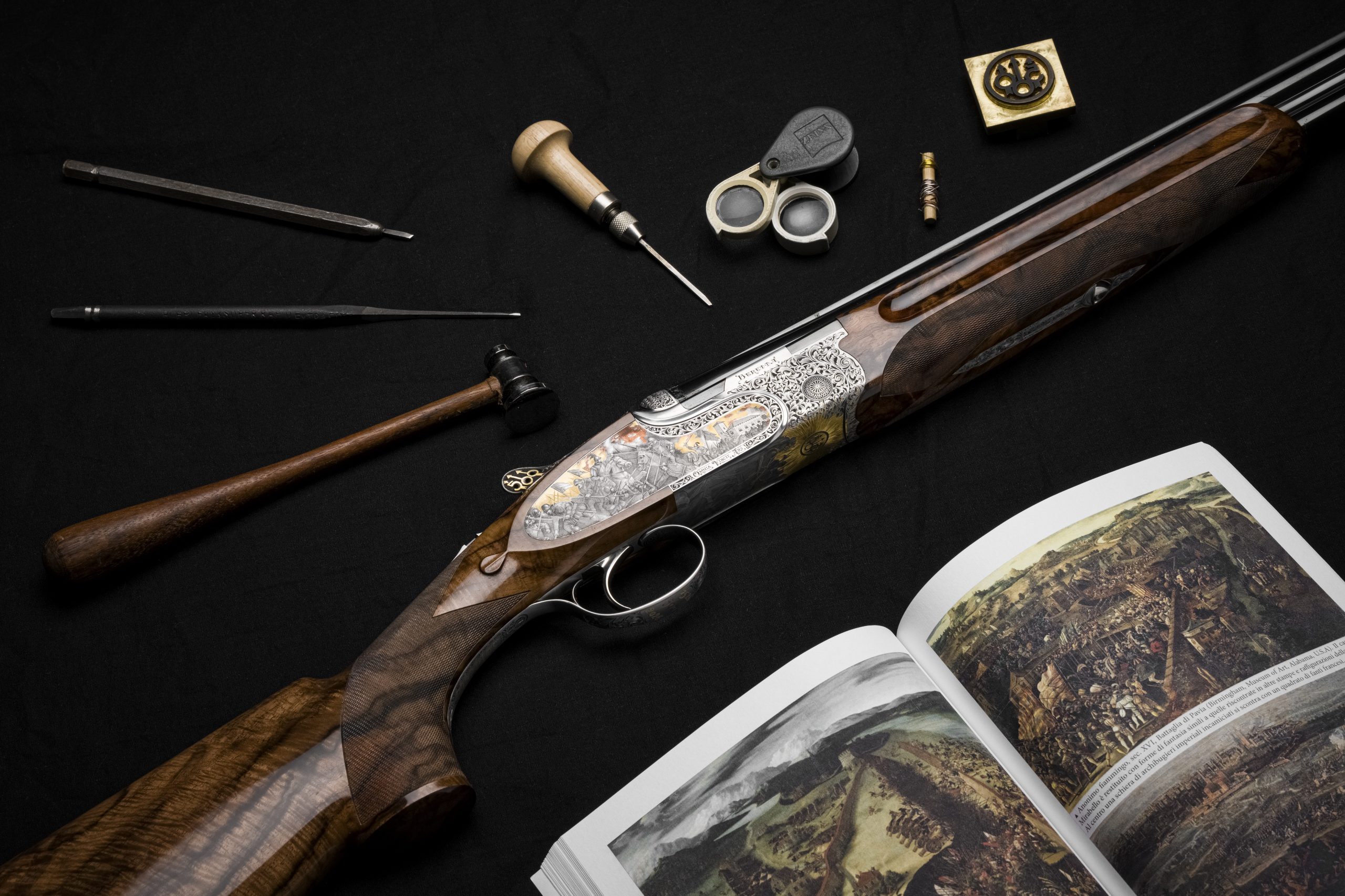

Inside the historic Oettingen driven hunt
For the first time in its history, the famed Oettingen driven boar hunt opened to outside guests. Simon K. Barr joined the inaugural party to experience a remarkable blend of heritage, wildlife management and world-class shooting in the Bavarian forests.
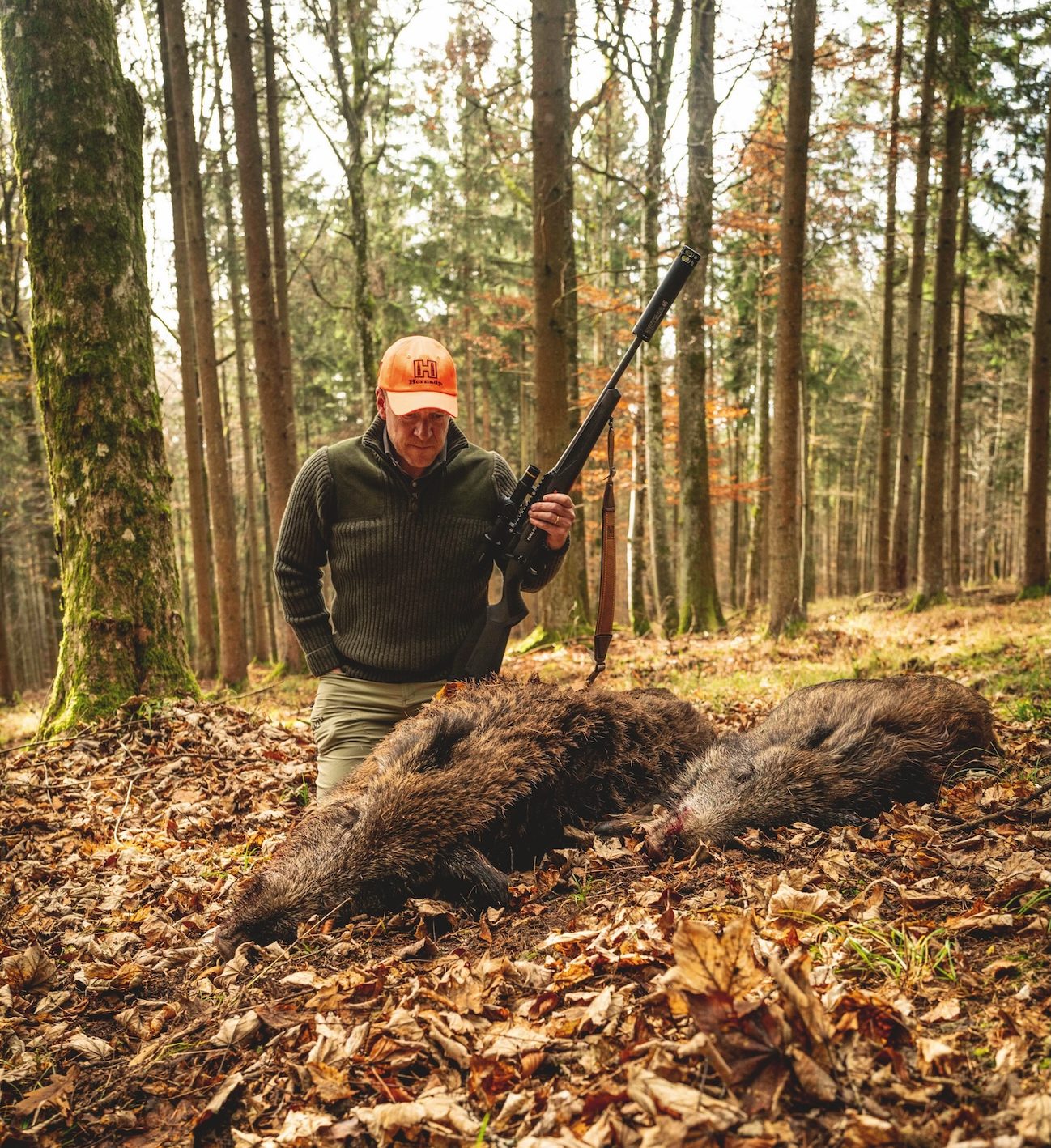
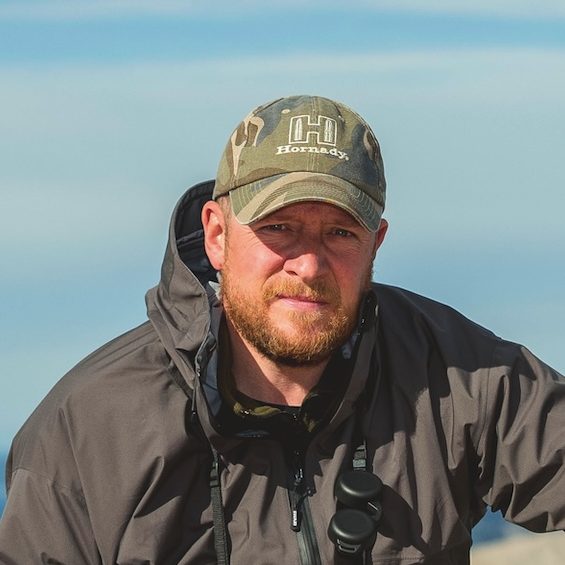
For the first time in its centuries of history, one of Europe’s most respected hunting estates opened its annual driven boar hunt to guests from outside the inner circle. Joining that inaugural group felt like stepping into a tradition shaped by a thousand years of heritage, discipline and deep respect for wildlife.
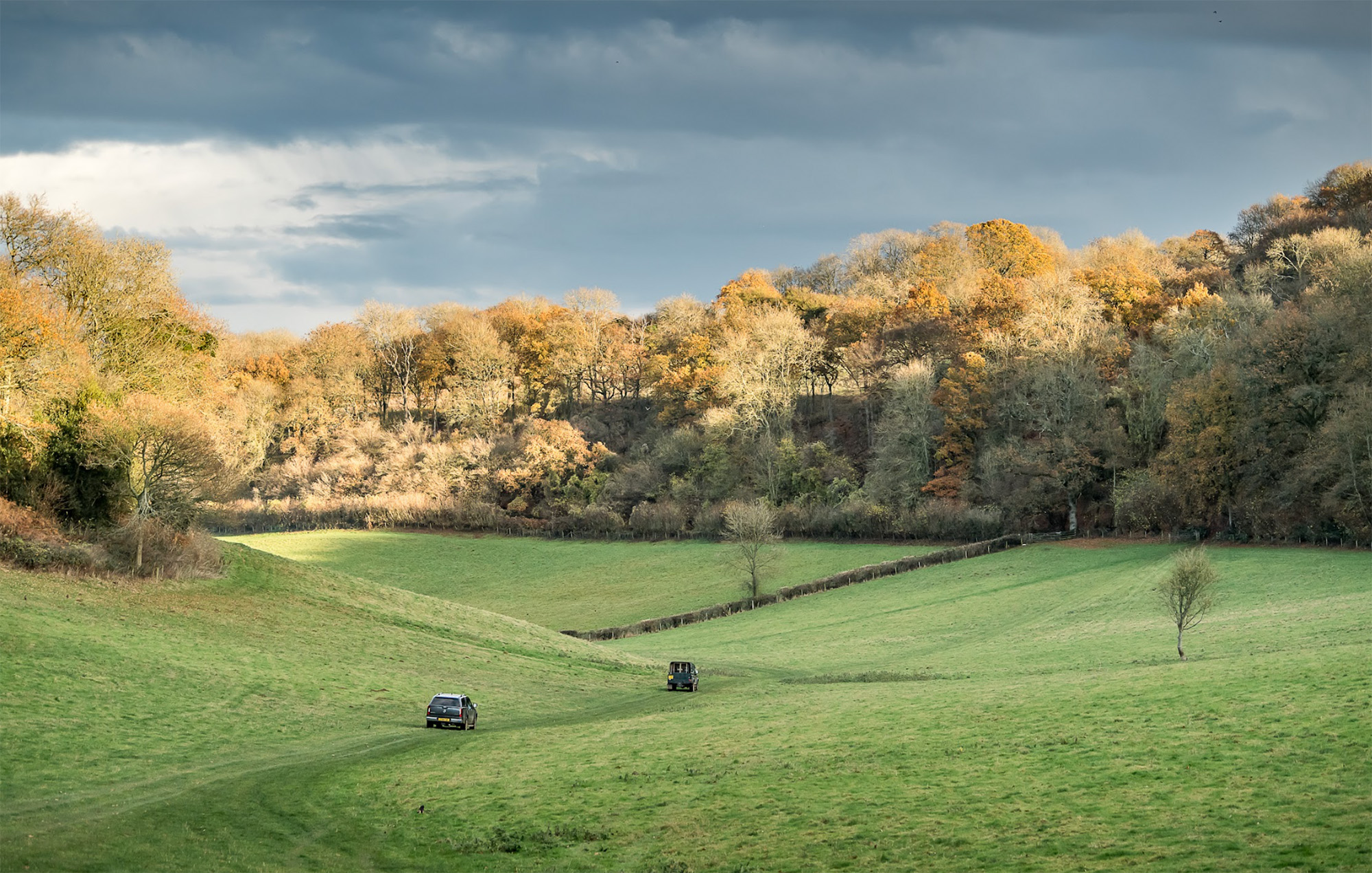
There are few invitations in European hunting that carry the heritage and significance of joining Prince Franz-Albrecht Oettingen-Spielberg for his family’s annual driven wild boar hunt. This is not just a recreational hunt or simply a social fixture. It’s a once yearly carefully orchestrated management day on one of the continent’s finest non fenced, free range estates, a landscape shaped and protected by the House of Oettingen Spielberg for centuries.
Schloss Oettingen and the estate legacy
The setting is Schloss Oettingen, a Baroque palace built between 1679 and 1687. The Oettingen lineage stretches back more than one thousand years, with connections to the Imperial Hohenstaufens. At its height the family ruled one of the largest secular domains in East Swabia. Despite the upheavals of the nineteenth century the family remained deeply rooted in the region and today they continue to manage their land with a sense of continuity that few estates in Europe can match.
This year marked a historic first. The family opened their famous driven boar hunt to a group of international journalists to witness and participate. To stand on ground traditionally reserved exclusively for the Princely family and their closest companions was an immense privilege.
Training day in Ulm
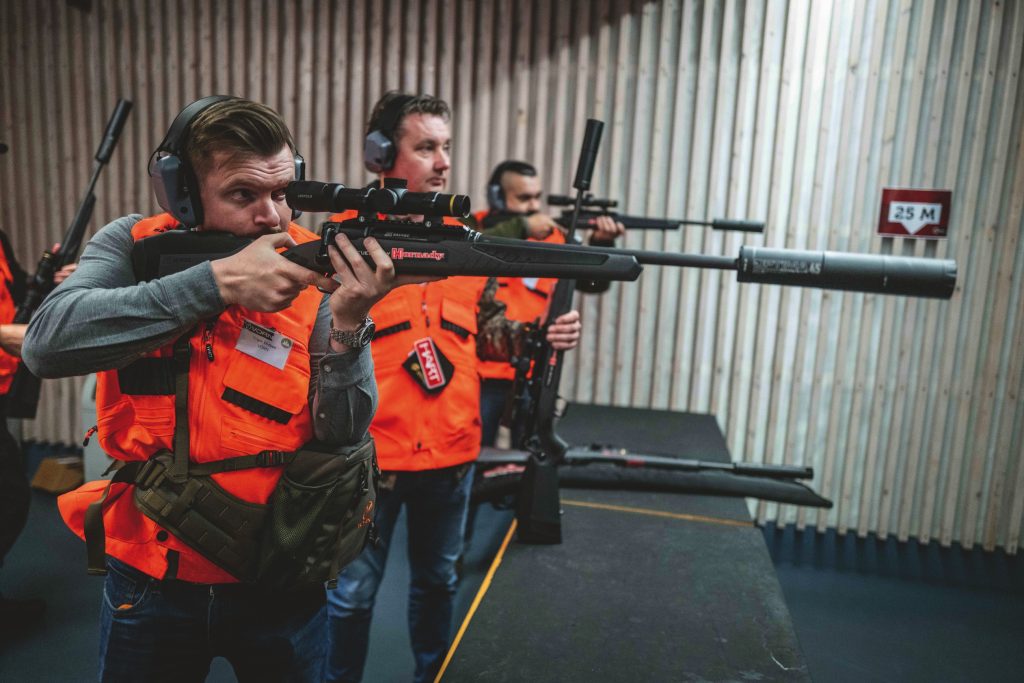
The weekend, co-hosted by Hornady, Savage Arms, Leupold and A-TEC, began at the MSZU shooting cinema in Ulm, a state-of-the-art training facility that reveals a shooter’s strengths and weaknesses with total honesty. Full size moving boar footage is projected onto a cinema screen and shot with any rifle. This demand instant judgement, correct lead and repeatable technique. This is as close to the real thing as you can simulate and I can confirm, it includes adrenaline. It exposes hesitation and flaws much more effectively than any paper range could. The screen freezes after the shot to show where your hits are.
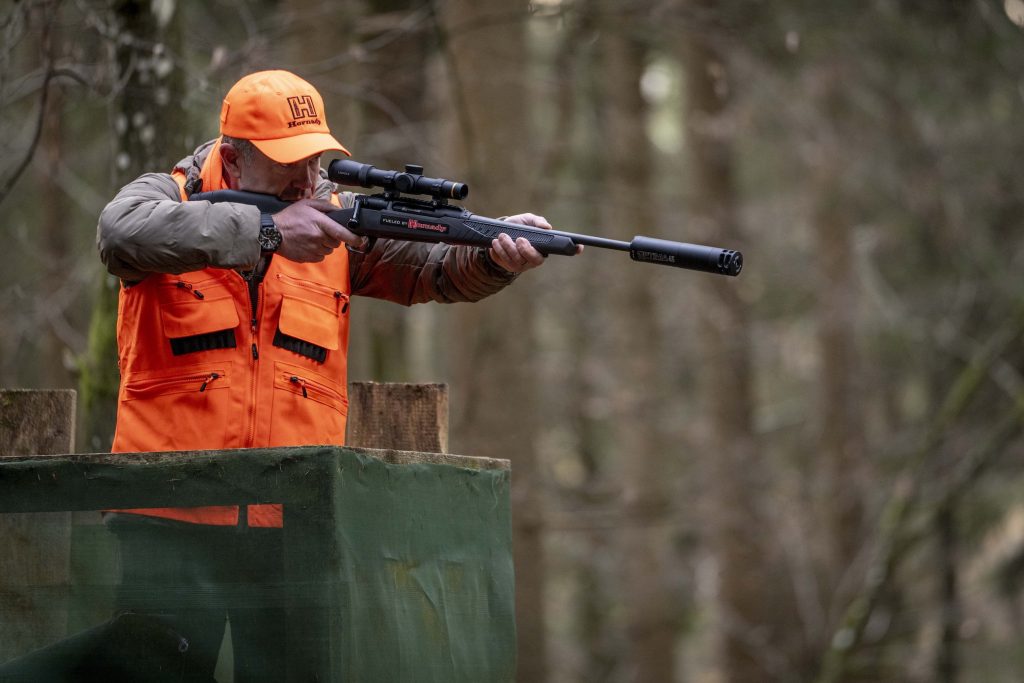
We were using Savage Impulse Driven Hunter rifles in .308. Hornady ECX 125gr .308 Winchester ammunition and Leupold VX-5HD Gen 2 1-5×24 scopes. I particularly liked the throw lever on the magnification that offered fast changes for closer and further targets. It was the ideal warm up before stepping into the forest, and by the end of the session the entire group, regardless of their varied international backgrounds, had found their rhythm.
Arrival in Oettingen
From Ulm we travelled to the beautifully preserved Bavarian town of Oettingen and checked into the hotel, not 100 years from the castle. That evening we prepared for one of the most memorable parts of the weekend.
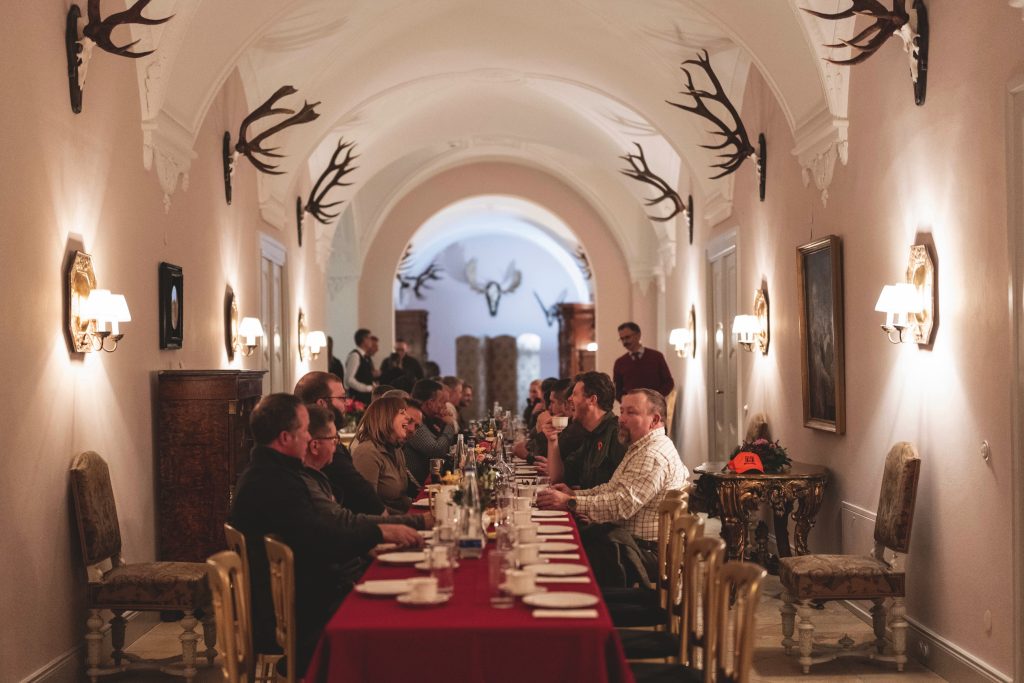
Entering Schloss Oettingen for dinner felt like stepping across a threshold into a living history. The trophies, vaulted ceilings, heavy beams, carved crests and oil portraits all spoke of a lineage that has shaped the region for centuries. The atmosphere was not theatrical but authentic. The castle is used by the family regularly as an extension of their own home, not a museum and the welcome we received reflected that.
Sharing a five course silver served meal in such a setting on the eve of the estates most important hunt of the year was a rare privilege. The international group added its own richness, many of whom I knew from a couple of decades on the media circuit in Europe. It is always nice to reconnect with some old faces. Guests from Germany, France, Italy, Spain, Poland, Hungary, Finland, Norway, Serbia, Bulgaria, Switzerland, the Netherlands, Sweden, the United States and the United Kingdom all brought their own perspectives and stories. Yet everyone understood that the next day would be something entirely unique.
Despite the hospitality there was no late night atmosphere. The significance of the coming day was clear to everyone. We left the castle early, stepping out into the cold Bavarian night with a quiet anticipation.
Briefing for the hunt
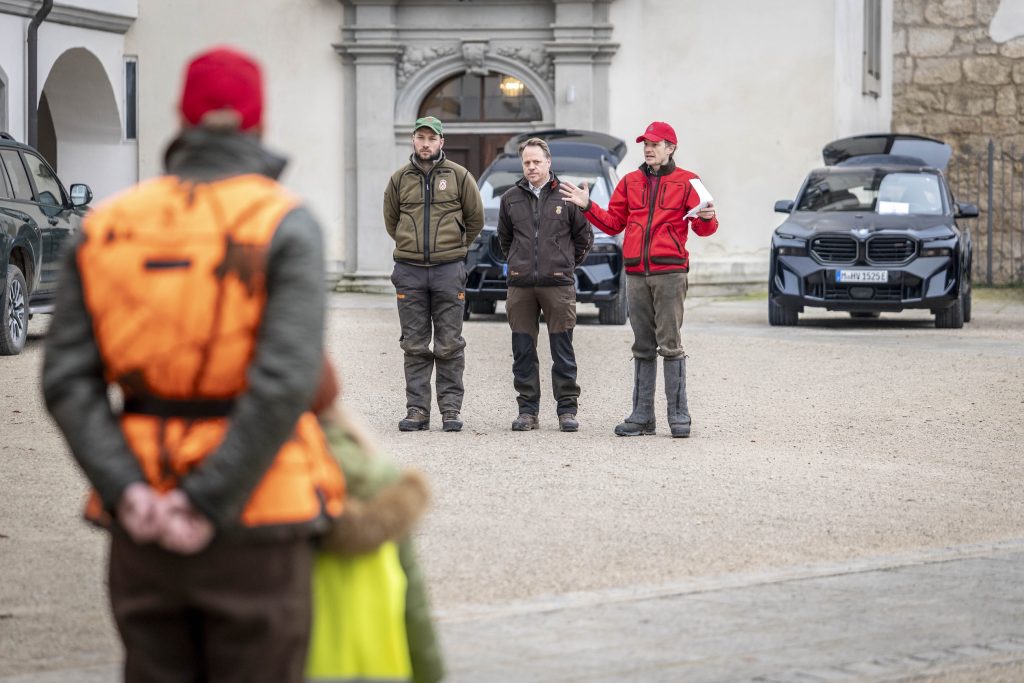
The next morning began with a full briefing in the courtyard of the castle from Franz-Albrecht himself. The Oettingen Forest rules are among the most refined and ecologically grounded I have seen, yet practical and far removed from the anxiety-inducing trophy hunting rules that often exclude larger females and males above 50kg I have witnessed elsewhere in Germany. This reflects a deep understanding of wildlife biology, long term sustainability but also getting the job done in a way that is enjoyable for all participating, so hunters relax and in my opinion, shoot more accurately.
This is a once a year activity for the forest. One day of extreme disturbance in return for every other day being quiet and peaceful. Management is key to the forest and this is a way of conducting the entire year’s cull with minimal disturbance for its inhabitants.
Species priorities and management
Wild boar were the primary focus. All age classes and sexes could be taken but younger animals were prioritised. Leading females were protected unless alone or all followers had also been taken, to maintain sounder structure. Roe deer were restricted to fawns and females, fallow deer to calves and does. Foxes were actively targeted for predator control. Mouflon were not to be shot.
Safety and discipline
The safety rules reflected the ethical discipline expected. Naturally no dangerous shots, correct identification of targets, particular caution of the dog teams that run free in the drives and mandatory marking of every single shot for the blood tracking teams following each drive. This was not a standard shoot. It was a carefully coordinated management operation where meat would be optimised yet rooted in tradition and ecological responsibility.
First drive in the forest
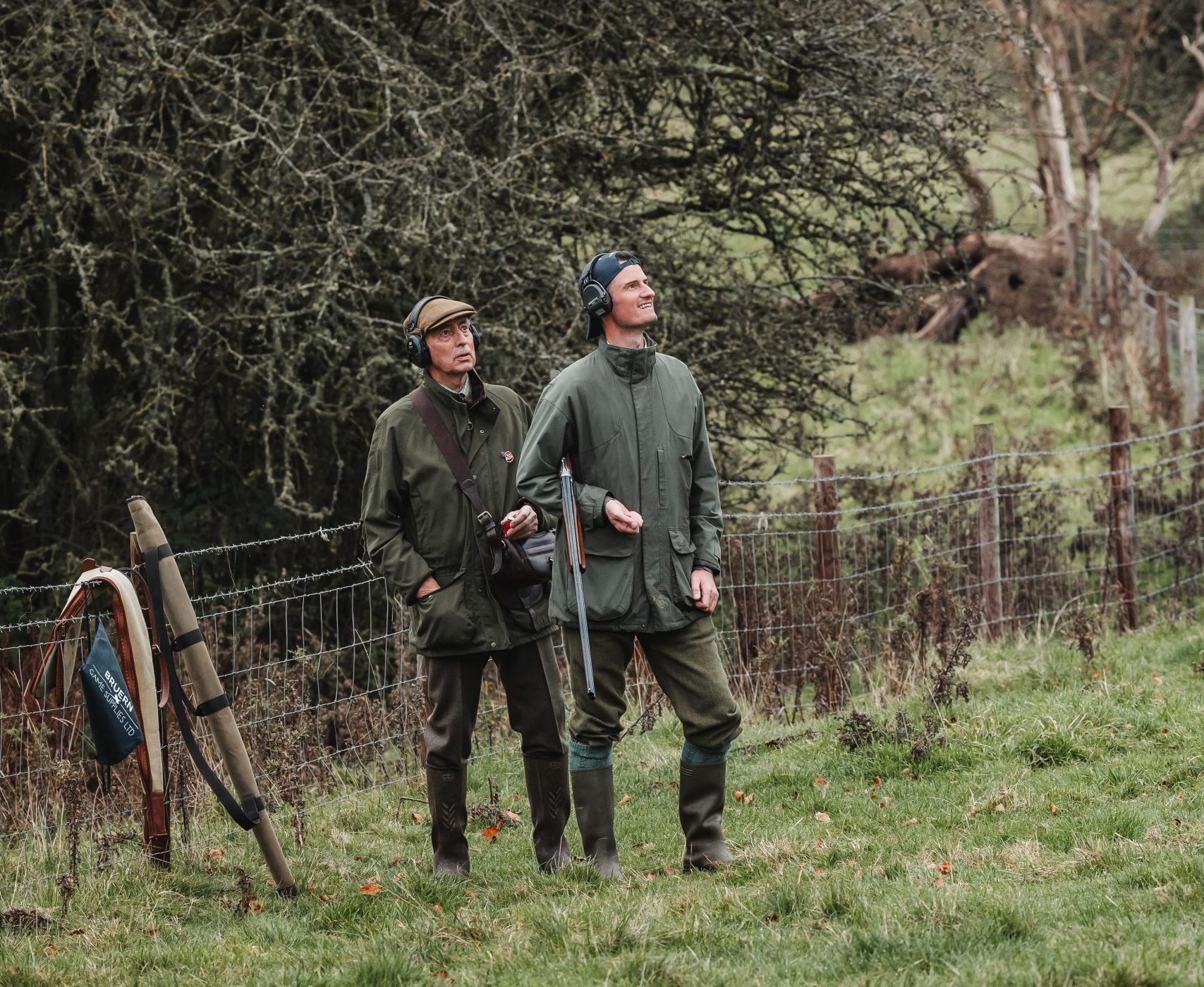
For the first drive I shared the stand with an old friend Neil Davies of Hornady. We had decided to switch shooter after each shot. In true Brit fashion, I let the American shoot first. Neil was up. Sharing a peg with someone you trust brings focus, rhythm and humour. The forest rewarded us quickly.
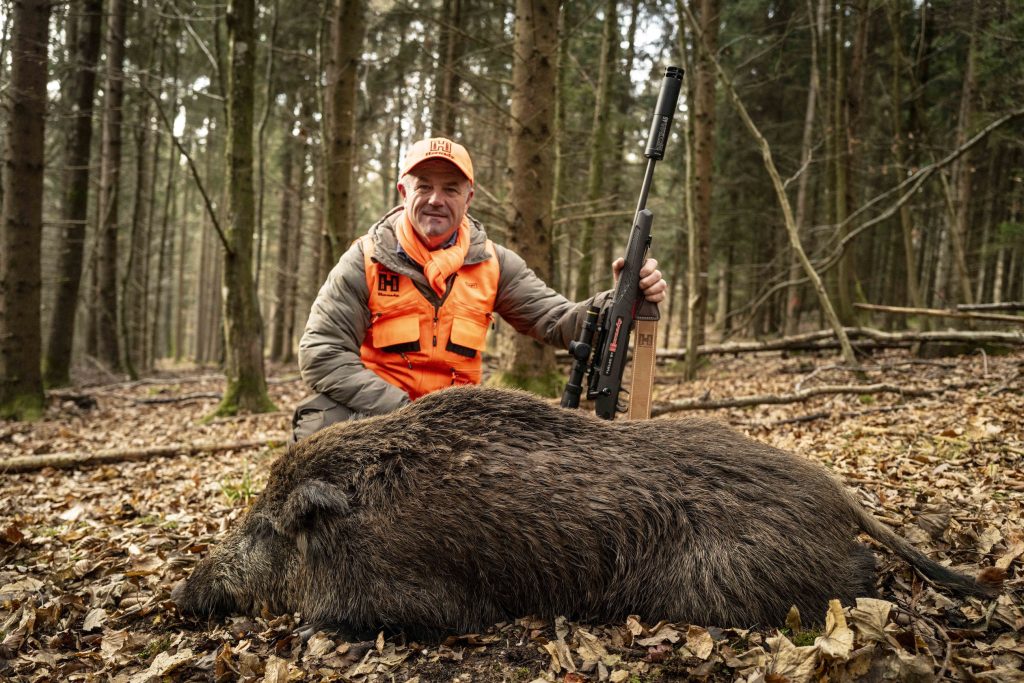
A young Frischling broke cover at speed into a ride and Neil took the opportunity cleanly, with minimal wiggle room between trees. Moments later a medium sized keiler crossed the same ride and I hit him in the lungs on the first shot but he ran on, I anchored him with the second closer to the head and it flipped in true Franz-Albrecht Wild Boar Fever style. A satisfying spectacle whenever it happens. The drive was rich with movement. Neil added a mature Uberlaufer and I took a young sow towards the end of the drive cleanly with one shot. A huge herd of 20 mouflon passed silently through the trees in between the action, including some incredible rams, pity they were not on the list for the day we both thought. Roe deer settled into pockets of cover. The dog teams worked tirelessly, always present in the background. This was about as good as it gets with action every few minutes on this two and a half hour drive.
Lunch in the woods
At the end of the drive, we had all been given an exact time to get down from the stands, we gathered up the boar we had taken for the ground crew and headed for a hearty Bavarian lunch, deep in the forest in a true Hansel & Gretel cabin. Sausage from a grill, red hind stew hearty bread and some quality company.
Related Articles
Big game
The art of hunting sika
Marc Newton shares his account of a recent hunt for the elusive sika in southern England
By Fieldsports Journal
Big game
Don Trump Jnr stalks roe in UK
Our guest editor Marc Newton takes Donald Trump Jnr roe buck stalking, as they reflect on their personal reasons for picking up a rifle
By Simon K. Barr
Get the latest news delivered direct to your door
Subscribe to Fieldsports Journal
Elevate your experience in the field with a subscription to Fieldsports Journal, the premium publication for passionate country sports enthusiasts. This bi-monthly journal delivers unparalleled coverage of game shooting, fishing and big game across the UK and beyond.
Each issue offers a stunning collection of in-depth features, expert opinions and world-class photography, all presented in a timeless yet contemporary design.
Save 16% on shop price when you subscribe, with a choice of packages that work for you. Choose from Print & Digital or Digital only with each journal delivered directly to your door or via the app every other month, plus access to past issues with the digital back issue library.