
Guest editor: Peter Wilson
Volume IX • Issue II: The Olympic gold medallist at London 2012 speaks to us from his Dorset farm
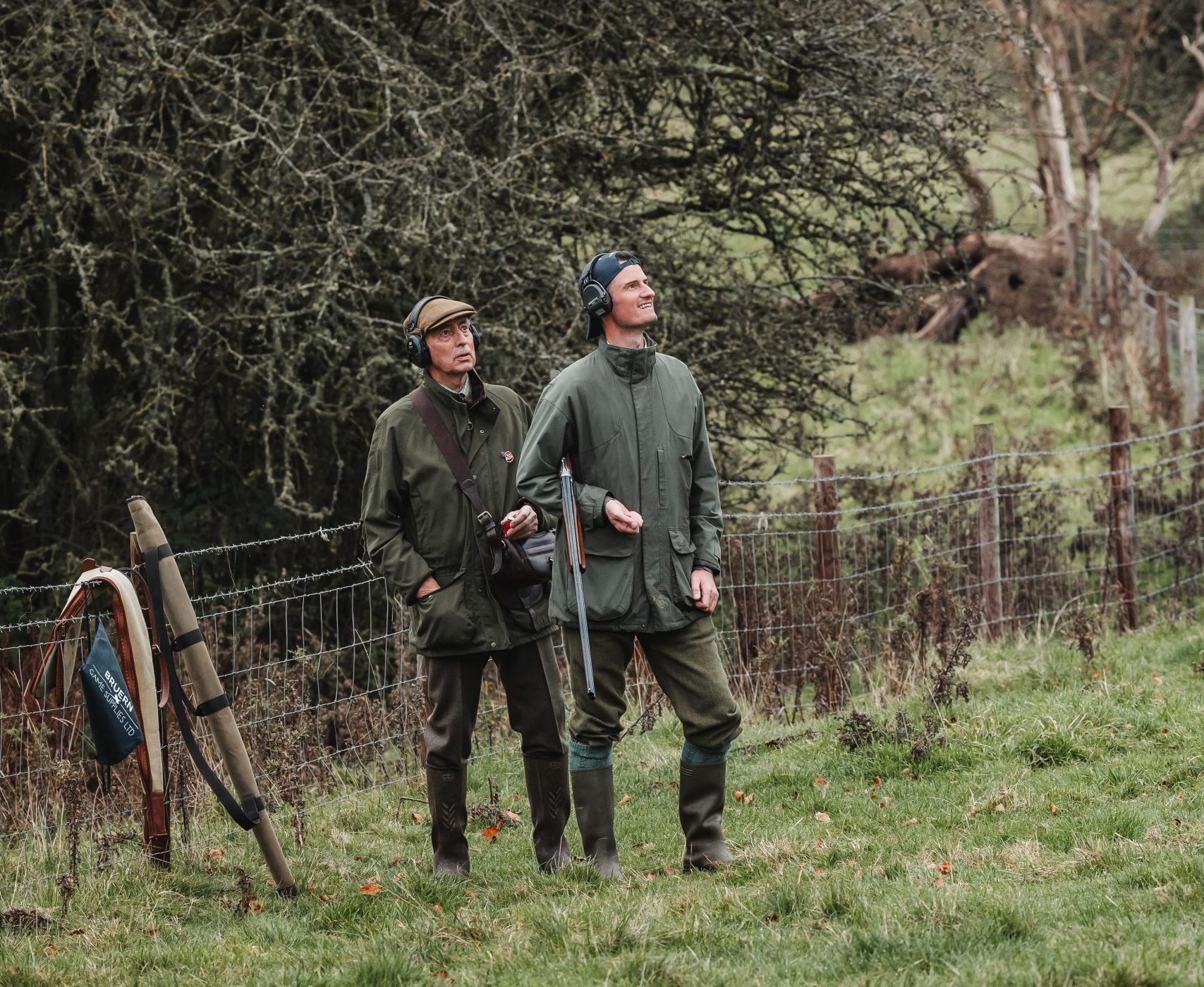

So, who is Peter Wilson?
I’m a dad, I’m a farmer, I’m an Olympic shooting coach, I’m a trader, and I was a competitive clay shot. My wife Michelle and I have two daughters – Robyn, nicknamed Bobby, who is seven, and Etta, who’s five. The farm is half horses and half organic dairy, which keeps me busy when I’m not in India.
Who first introduced you to shooting?
My dad introduced me, though I wouldn’t say he was overly keen on me shooting initially because my family bred racehorses. There was a definite desire that I should ride, and in fact I was forced into riding, which perhaps made me not love it quite as much as my mum would have liked. Dad would occasionally go game shooting – half a dozen times a year locally – and I would always want to know where he was going and why I wasn’t allowed to go.
Eventually, I persuaded him to let me go beating when I was about 10. I also started shooting air rifles and .410s at about that age. I then started to do a lot of beating locally – Dad would drop me off and I’d go beating for the day and loved it. Then I got more into shotgun shooting. I think I jumped from a .410 to a 20-bore quite quickly because I couldn’t hit anything with my .410 – I was utterly atrocious. Then I went to a 16-bore, which lasted only a few months, then to a 12-bore, and I never really looked back.
The clay bashing really only came as a result of trying to improve my game shooting. I used to walk-up a lot of hedges with Dad shooting rabbits. He’d be on one side, I’d be on the other, spaniels in between, and we might shoot three or four rabbits and a few pheasants. I wouldn’t get very many chances to pull the trigger, so I would always want to improve.
Did you shoot at school?
I managed to work my way into the first team for shooting at Millfield School. That instilled in me that you have to work really, really hard to be good at anything. I wasn’t particularly good at anything, so when I found I was half decent at shooting I just worked incredibly hard. That’s what my coach Sheikh Ahmed Al Maktoum saw in me when I started working with him – my work ethic was good and my work rate was very high. I’m a perfectionist. I want to be the best at everything I’m doing. For instance, I’m putting a 400m farm track in at the moment and I want it to be the best farm track in the world. Everything I do has to be perfect – if we’re concreting, it has to be perfect, and if it isn’t I want to rip it out and do it again. The guys working for me on the farm think I’m completely mad, but it’s either right or wrong. I see the world in a very black and white way.
I’m ashamed to say this really, but I never kept medals that weren’t gold. I just threw them away. The only one I kept was one from South America that won me the quota place to the Olympic Games in London, because that was my golden ticket. But second is first loser. When you get beaten and land in second or third place, you must shake the winner by the hand and say “Well done.” Then you’ve got to dust yourself down and see how you can get better – because you still lost.
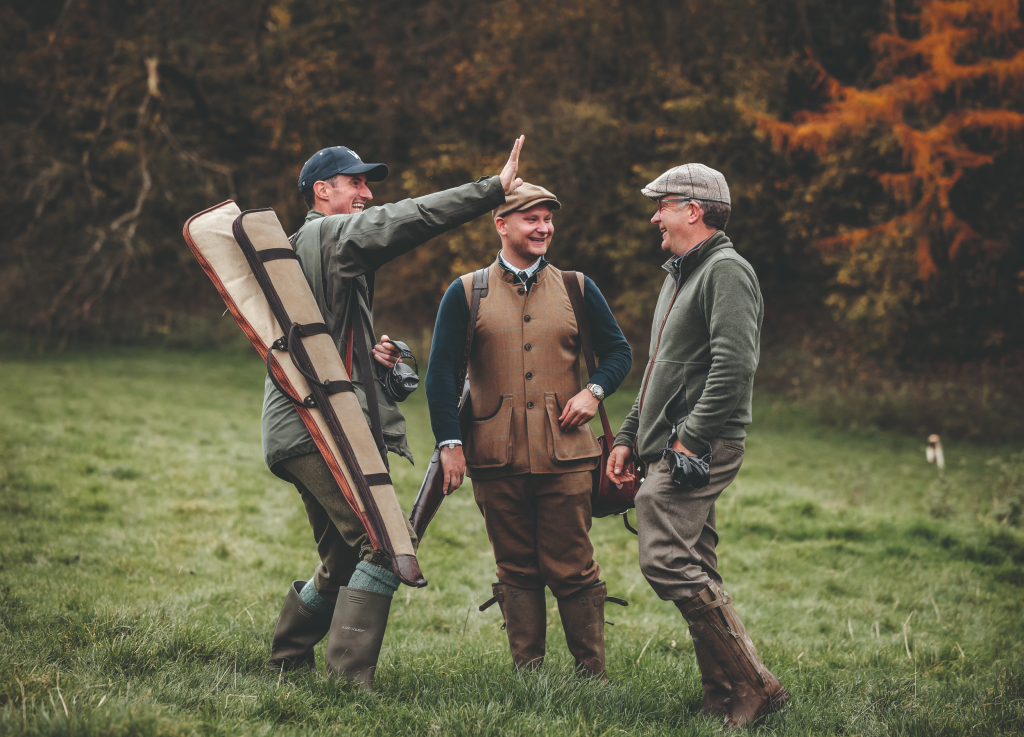
What was your role in Nathan Hales’s Olympic gold success?
I was able to help him in the final few years in the build-up to the Olympics. There’s a difference between being very good and being an Olympic gold medallist. A tiny difference. Where I was able to help him was that last little bit. I asked Nathan to do some wacky stuff that he didn’t want to do, and I’d like to think it paid dividends. For example, I asked him to shoot a registered event in England single barrel. Everyone else would shoot it two-shot, but in Olympic Trap finals you don’t get that second barrel, just one shot.
Nathan shot 50 targets single barrel and rang me saying he was shooting really badly and was struggling. I said if you shoot with your second shot, count me out – I won’t work with you anymore. He then ran 50 straight. He got it by the end. He rang me afterwards and said, “That was really painful. I didn’t enjoy it, but I get it.”
You’re now head coach for the Indian Olympic trap team. How’s that going?
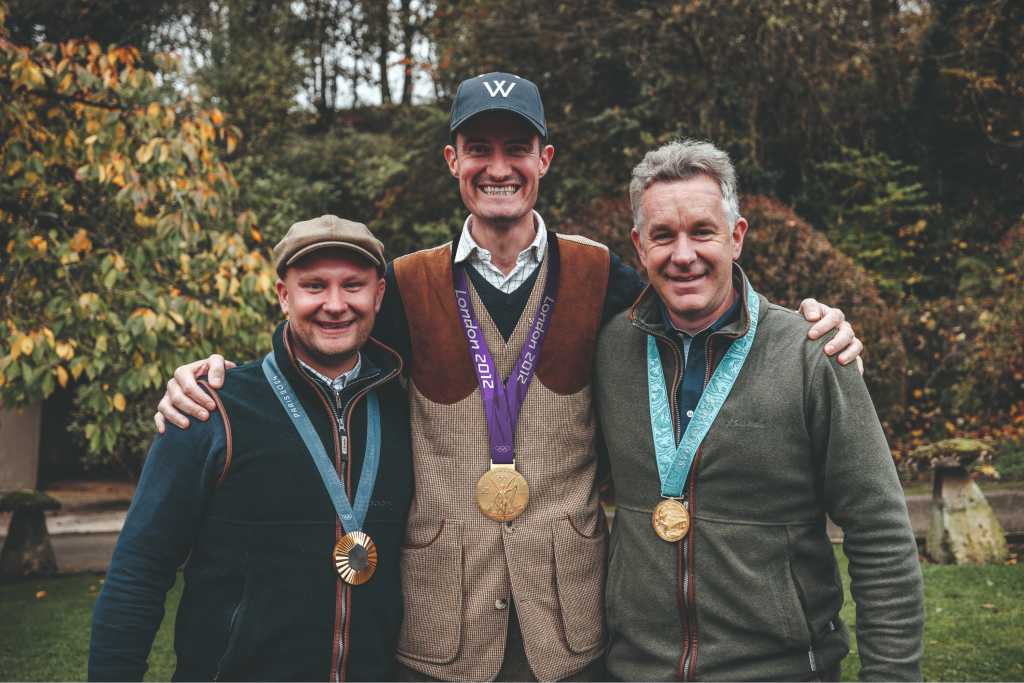
I’ve been with them since April. India is one of the largest shooting nations on the planet for shotgun shooting and I’m very proud to be the Olympic trap coach. It’s a nation of 1.6 billion people, but they really aren’t punching their weight compared with the UK with 67 million people. We’ve got Nathan as Olympic gold medallist and world record holder, Matt Coward-Holley as Olympic bronze medallist, Ed Ling as another Olympic bronze medallist. We’re punching way above our weight. India won a gold medal in a World Cup 12 years ago and hasn’t won anything since. They’ve been treading water, and it’s about accepting where you are. When I first started working with Ahmed I thought I was wonderful, but he said, “You’re useless – you haven’t won a World Cup yet.” To win the Olympics you have to accept where you are and lose the ego.
I’m asking the Indian team to do the same out-of-the-box stuff I asked Nathan to do. They’ve just been in Italy shooting the Green Cup. I asked a couple of my guys to shoot single barrel – the guys that were shooting the best but could get better. They looked at me as if I was an alien. I said, “You’re going to have to tell the referees you’re only shooting one shot, and they’re going to look at you as if you’re an alien too. You’re going to go red, you’re going to get flustered, angry – all the feelings you’d get at the Olympics.” By the end, they got it. They said it was uncomfortable, hot, sweaty, – not nice. I said, “Yeah, well that’s about 20% of what it will feel like at the Olympic Games.”
Tell us about your home farm shoot.
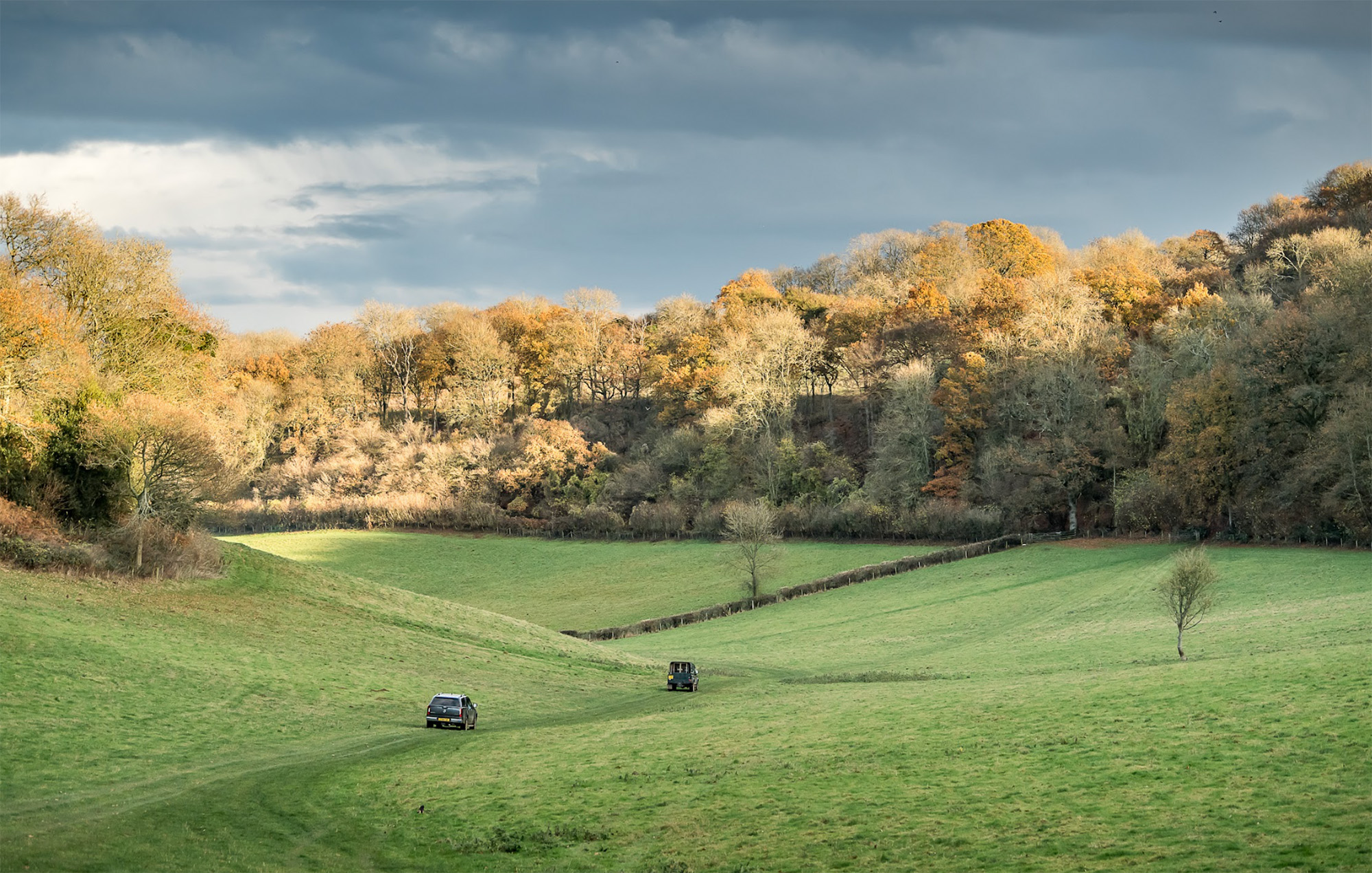
We’ve actually just had a fallow year. Dad’s just had his knee operated on and he’s the gamekeeper, plus I’m in India so much at the moment. We normally run a tiny family private shoot of just four drives and six Guns. We shoot a couple of drives, have a snack, shoot another couple of drives, and then have a very long, boozy lunch, which we all joke is the best drive of all. If we have a really good day we might shoot 80, and on another day we’ll shoot 20. We’re very average, but we enjoy what we do.
We live on a commercial farm, so we do have to ensure the people on the dairy and racehorse sides are happy, but we do what we can from a conservation point of view, planting hedges and wildlife corridors where we can. I’d like to spend the next few decades planting a lot more trees around the farm – that is my next project.
Where else do you shoot regularly?
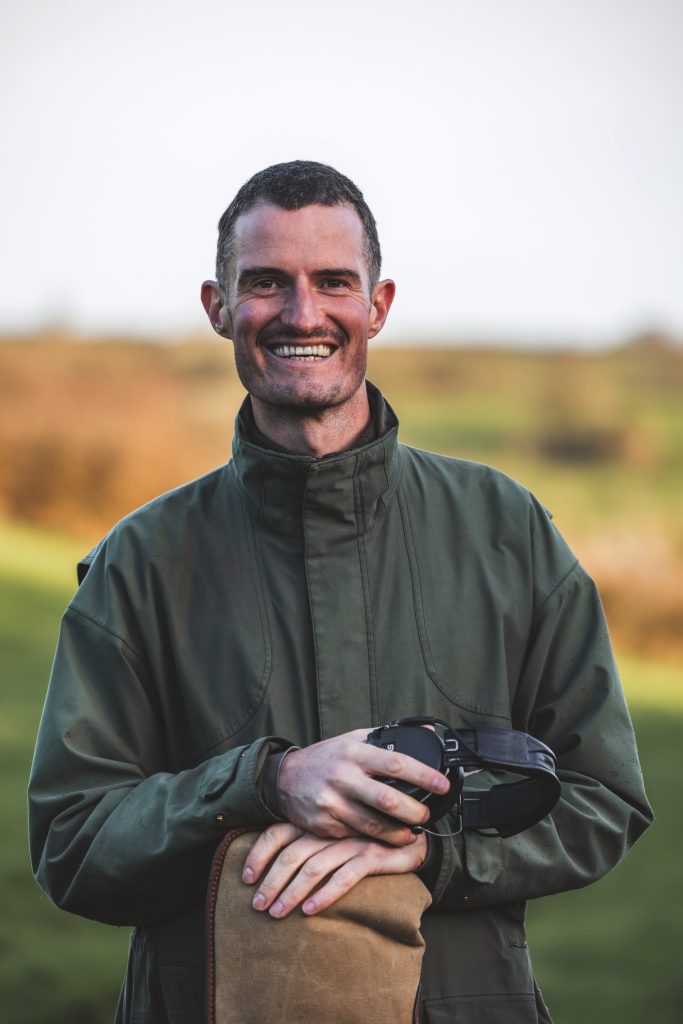
I’ve also got a half gun on a local shoot at Trent, just north of Sherborne, run by an old school friend. It’s such a lovely little shoot – similar size, 60-80 bird days. I’ve got four pegs spread over the season and I just pray I’ll be around for them. My dad prays I’m not around for them because then he gets to shoot all my days!
Smaller syndicate days like these form a significant part of my shooting calendar, and each season, I will attend a dozen or more similar days.
Do you enjoy cooking and eating wild game?
Yes, pheasant and pork lasagna is my absolute favourite. I just cannot eat enough of it. We keep all the game from our shoot, send it to a local game dealer who returns it as mince, then combine it with pork from our own pigs to make mountains of lasagna throughout the year.
On shoot days, everyone is invited for lunch, and we invariably serve pheasant lasagna with a green salad and red wine. To feed everyone properly (with around 30 for lunch, plus pheasant goujons at Elevenses) we need to shoot around 100 birds, allowing for a few birds to be taken home by those who want a brace. Annoyingly, some of the beaters don’t like my lasagne, but that’s tough because I adore it!
Describe your ideal game day.
Over my lifetime, I have shot millions of clays. I must have shot a million rounds of Double Trap alone! So a game day for me is definitely not about getting loads of shots in. For me, it’s all about spending time with really nice people; really good, like-minded folk. They don’t all have to all be your best buddies – it could be with people you’ve just met. But it’s that community aspect that I really value.
Do you have a dog?
Yes, we have two lurchers: Rabbit, an Exmoor lurcher (i.e. a mongrel) who’s getting on and now deaf as a post, and Tika, a lurcher-whippet cross. They’re the fastest retrievers in Dorset, possibly the world, though admittedly not very good at it. This season marked Tika’s first day out in the field, which was tremendously exciting, particularly as Michelle and the children all came along for the day.
Tell us something about yourself that not many people know.
I have quite bad OCD. I have even visited a doctor about it in the past but it was actually what helped me win the Olympics, because being that particular in life meant that the no-stone-unturned approach worked like a dream. Everything has to be just so. I wouldn’t say I’m particularly easy to live with because of it, but I used the OCD as my superpower to a degree.
Related Articles
Meet the guest editors
Meet the guest editor: Chuck Leavell
Volume VII Issue I is guest edited by Chuck Leavell, touring keyboardist and musical director of The Rolling Stones. In this issue, we learn how he has created habitat for game and song birds alike on...
By Fieldsports Journal
Meet the guest editors
Meet the guest editor: Franz-Albrecht zu Oettingen-Spielberg
Volume VI issue VI is guest edited by Prince Franz-Albrecht zu Oettingen-Spielberg, a land manager, conservationist and boar-hunting superstar.
By Fieldsports Journal
Get the latest news delivered direct to your door
Subscribe to Fieldsports Journal
Elevate your experience in the field with a subscription to Fieldsports Journal, the premium publication for passionate country sports enthusiasts. This bi-monthly journal delivers unparalleled coverage of game shooting, fishing and big game across the UK and beyond.
Each issue offers a stunning collection of in-depth features, expert opinions and world-class photography, all presented in a timeless yet contemporary design.
Save 16% on shop price when you subscribe, with a choice of packages that work for you. Choose from Print & Digital or Digital only with each journal delivered directly to your door or via the app every other month, plus access to past issues with the digital back issue library.