

Loading your own ammunition
Whilst factory ammunition provides perfectly acceptable accuracy when teamed with the correct rifle and enough practice, hand-loading your own can be both advantageous and rewarding.
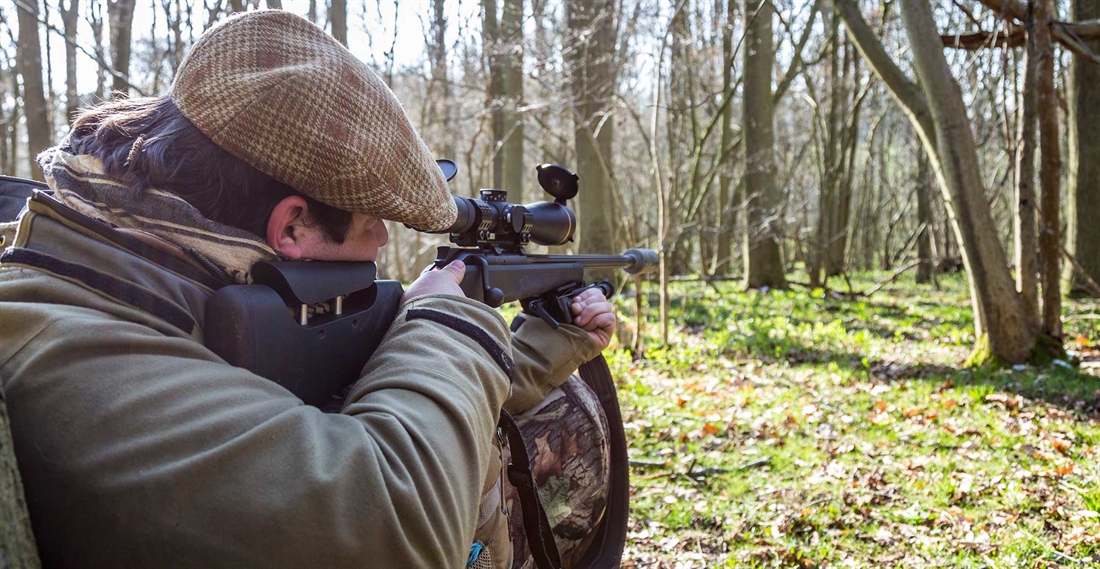

For deer stalking purposes, where the average shot is rarely taken beyond 250 metres, and often much closer, modern factory ammunition provides perfectly acceptable accuracy when teamed with a reasonable rifle. Recent advances in ammunition and bullet manufacturing have increased the reliability and performance of factory loads substantially. Adapting to trend and technology, it’s now not uncommon to find one manufacturer offering four or five different loads of ammunition in each calibre. However, when one arrives at a certain point of interest in accuracy, ballistics and general rifle ‘geekery’, hand-loading is the inevitable next step.
With a little equipment, time and knowledge, even the small-scale hand-loader can achieve drastic improvements in rifle accuracy. Because one can tailor the load to the individual rifle, access to a much increased selection of bullet designs and weights is an attractive bonus. If you’re considering getting into hand-loading, I would recommend looking through the catalogues produced by the various bullet manufacturers so that you can see the variety of projectiles that just aren’t found in factory loads.
Before singing the praises of hand-loading too much, however, I think it is important to dispel a common myth – that it offers a great fiscal saving. I’m sure with a little time it wouldn’t be too hard to calculate, but I would suggest that once you have invested in the necessary equipment and books and spent time reading up on the subject to make a comparable or better product than a factory round, you will be little better off than if you’d just bought them in the first place.
I was lucky that when I became interested enough in accuracy to start hand-loading, my father was already on hand with a wealth of knowledge and experience. For those considering loading their own rounds I would strongly recommend finding a course or mentor of some kind; the result of getting it wrong can be truly devastating.
Perhaps the greatest advantage of hand-loaded rounds, in my opinion, is the ability to pick the ideal bullet for the job at hand. Take for instance the 6.5×55 calibre – for me, without question, one of the greatest all-round hunting cartridges available. Its ability to drop larger animals combined with its lack of recoil and inherent accuracy make it my primary recommendation when people ask me what to buy for the magical ‘all-round’ rifle we strive for. In the minds of some people, though, the calibre is ‘slow and heavy’… This reputation came about because for a long time the only factory ammunition available was that with 140gr projectiles. I expect this is because in much of Europe, especially Scandinavia where the 6.5×55 is very popular for hunting a range of animals from capercaillie to moose, heavier bullets are demanded.
For some years, my ‘workhorse’ rifle was a Tikka T3 in 6.5×55, and it served me well on everything from mountain hares to red deer. In the 6.5, after considerable testing, I settled on two different loads. The first used the 95gr Hornady V-Max bullet and the second the 120gr A-MAX bullet by the same manufacturer. With some load development and testing using a chronograph, the 95gr bullet was pushing 3,000 feet per second (fps), and the 120gr approximately 2,600fps. The 95gr varmint bullet was ideal for shooting all kinds of vermin, and basically performed like a .243 on steroids; the 120gr bullet was perfect for stalking and has taken red stags of over 20 stone on many occasions.
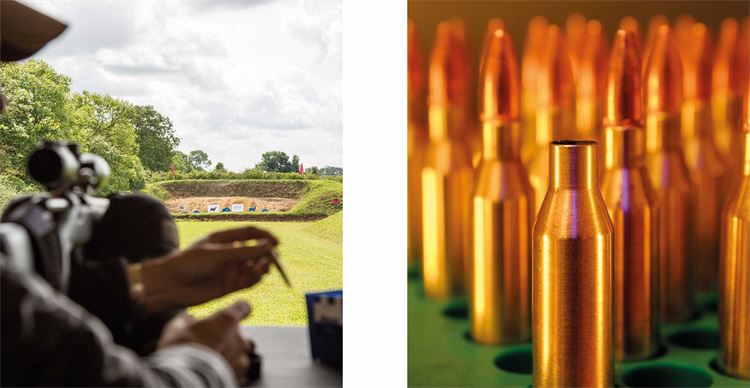
Hand-loading is much like tying flies – many people have their own way of doing it and while there are a few no-no’s, there’s no set way of doing it right. Indeed, there is a vast array of different pieces of kit that do the same job, from a number of manufacturers, and they vary in price from the cheap to ridiculous.
For most people, a ‘beginner’ kit from a reputable maker will offer the ideal introduction which can then be built upon as one advances further into the depths of the subject. Electronic and automated systems have gained significant traction in recent years, with the latest offerings proffering faster and more accurate measurement than ever before. However, unless you’re loading thousands of rounds, there is little point in getting too technical with the equipment. Keep it simple; the most important thing is learning to use it properly, and understanding the limitations of what you’re producing.
Loading allows you to tune your ammunition to each individual rifle, through a few different ways, and so it is very helpful to have access to a range where you can pick a nice day and spend an hour or two working on load development. A chronograph is also very helpful, as it means you can compare accuracy and speed; there is no point in having a load that will shoot one-hole groups at 100m, but is dropping 30cm at 200m. Many rifle shooting clubs will own a chronograph that they can lend to members, and coupled with their access to proper range facilities, it makes a strong case for the hand-loading beginner to look at joining such a club.
Another good resource worth taking advantage of is the vast amount of online and social media based forums dedicated to the matter. Like with all things in life, the internet holds a wealth of information, and not all of it is reliable or accurate, but once you’ve waded through a fair amount of questionable ‘experts’, then you invariably find one or two platforms with useful information and discussion. Coupled with the reloading manuals from various bullet and equipment manufacturers (think recipe book for rifle loads), it is fairly easy to understand the parameters of what is safe, and also start to learn what works well and what doesn’t.
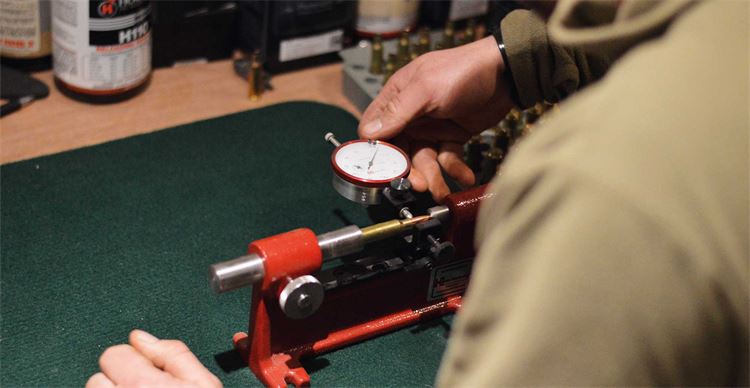
The important thing to stress to those loading ammunition for hunting purposes is that repeatability is key. It goes without saying that all the cartridges you load must be legal for the intended quarry, and they must be reliable. Bullet design is a complicated field, and the effect of speed on the expansion of the bullet is very important. When shooting ‘light for calibre’ loads, it is especially important to ensure that the bullets won’t pencil through the target animal without inflicting proper damage. This is something best discussed with a knowledgeable gunsmith as it is so dependent on the rifle, with twist rate and other such factors coming into play.
Key points
1: If you’re a newcomer to hand-loading, find an experienced mentor to show you the basics
2: Be organised and meticulous, and load rounds away from any distraction
3: Join a club/range where you can test rounds properly
4: Don’t skimp on materials – the results can be devastating
5: If the objective is to use the rounds you produce for live quarry, think about how they will perform at point of impact; the most important thing is that they will kill the animal as humanely as possible, with minimal carcass damage where applicable
6: Respect the limitations of your rifle and skill level
Related Articles

Big game
Inside the historic Oettingen driven hunt
For the first time in its history, the famed Oettingen driven boar hunt opened to outside guests. Simon K. Barr joined the inaugural party to experience a remarkable blend of heritage, wildlife manage...
By Simon K. Barr

Big game
The art of hunting sika
Marc Newton shares his account of a recent hunt for the elusive sika in southern England
By Fieldsports Journal
Get the latest news delivered direct to your door
Subscribe to Fieldsports Journal
Elevate your experience in the field with a subscription to Fieldsports Journal, the premium publication for passionate country sports enthusiasts. This bi-monthly journal delivers unparalleled coverage of game shooting, fishing and big game across the UK and beyond.
Each issue offers a stunning collection of in-depth features, expert opinions and world-class photography, all presented in a timeless yet contemporary design.
Save 16% on shop price when you subscribe, with a choice of packages that work for you. Choose from Print & Digital or Digital only with each journal delivered directly to your door or via the app every other month, plus access to past issues with the digital back issue library.