
Larch-cured smoked trout with buckwheat blinis and lemon crème fraîche
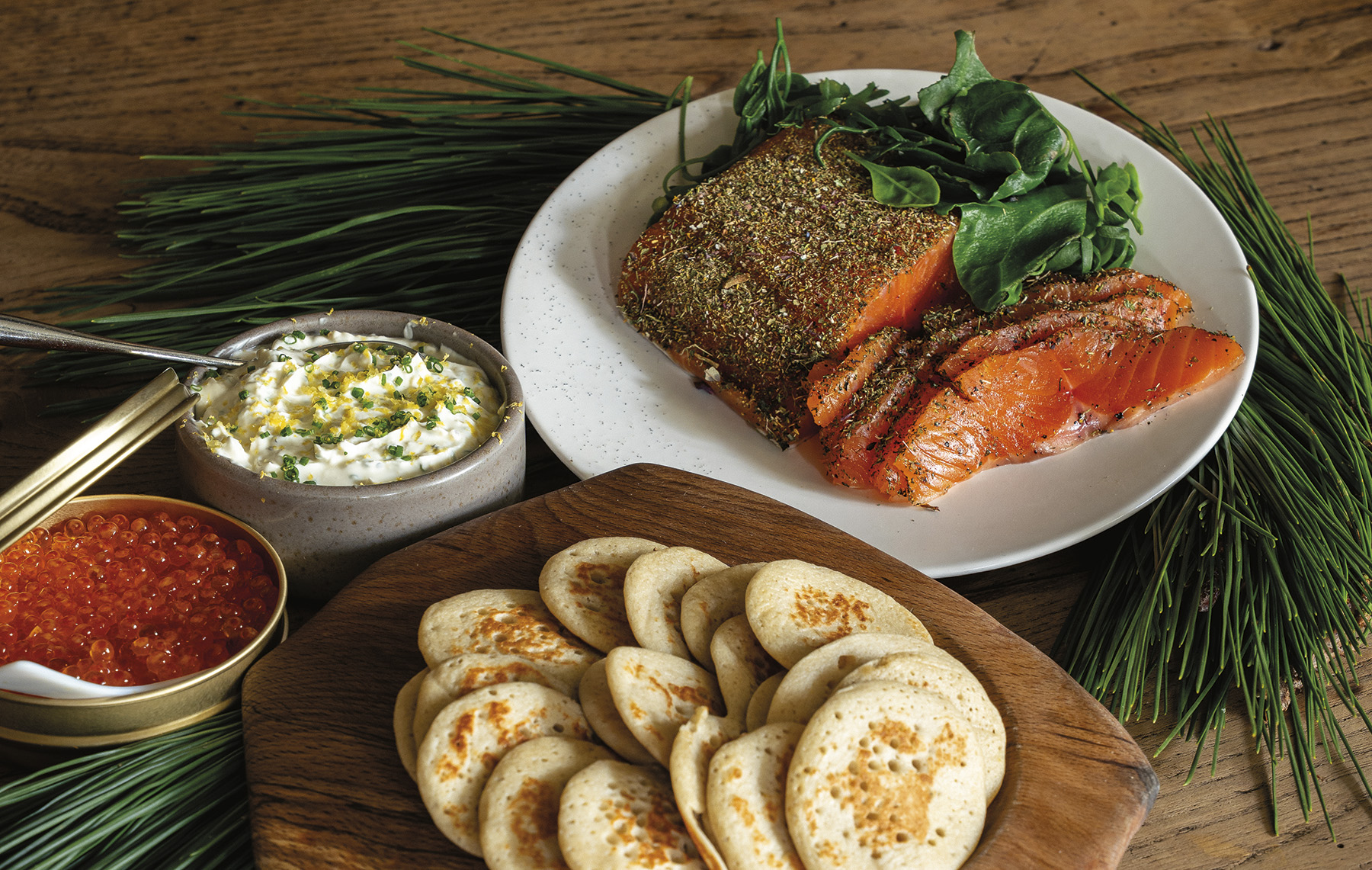
Head chef Jordan Taylor of The Great Bustard in Wiltshire uses larch needles from the surrounding estate to cure and cold-smoke fresh trout, pairing it with buckwheat blinis and a sharp lemon crème fraîche. It is a dish that makes the most of a river-caught fish – refined enough for a dinner party starter, but rooted in the landscape where the trout was taken.

Ingredients
For the trout cure
- 1 side of trout
- Larch needles or young larch growth
- 200g salt
- 100g sugar
- 50g black treacle
For the buckwheat blinis
- Plain flour
- Buckwheat flour
- Milk
- Fresh yeast
- 1 egg
For the lemon crème fraîche
- Crème fraîche
- Lemon zest and juice
To serve
- Trout roe
How to make larch-cured smoked trout with buckwheat blinis – step by step
- Step 1. Combine the salt, sugar and black treacle with the larch needles to make the cure. Pack the cure around the trout side and leave in the fridge for 6–8 hours.
- Step 2. Once cured, rinse the trout thoroughly under cold water and pat dry.
- Step 3. Cold smoke the trout for 20 minutes, then transfer to the fridge and chill until firm. Slice thinly before serving.
- Step 4. Make the blini batter by combining plain flour, buckwheat flour, milk, fresh yeast and the egg. Leave to prove until the batter is light and slightly aerated.
- Step 5. Cook the blinis in a lightly oiled pan, dropping small rounds of batter and cooking until set on top and golden underneath. Flip briefly to finish.
- Step 6. Mix crème fraîche with lemon zest and a squeeze of lemon juice to taste. Season lightly.
Serving suggestion
Arrange the blinis on the plate and top each one with a slice of smoked trout. Add a small spoonful of lemon crème fraîche and finish with a little trout roe. Serve immediately.
Tips for the best larch-cured smoked trout
The larch needles are what set this dish apart – young spring growth from larch trees carries a subtle citrus and resinous note that works particularly well with trout. If you are curing fish caught from the River Avon or a similar chalk stream, the quality of the raw ingredient matters enormously; a well-conditioned fish needs little else. Do not over-cure: 6 hours gives a firmer, cleaner result than pushing to the full 8 hours, which suits a thinner side. Cold smoking at a low temperature keeps the flesh silky rather than cooked – monitor carefully and do not allow the temperature to rise.

About the chef: Jordan Taylor
Jordan Taylor has worked in some of Britain’s most respected kitchens. He trained under Kenny Atkinson at the Michelin-starred House of Tides, refined his technique at three-Michelin-starred Restaurant Gordon Ramsay, and spent time at Moor Hall in Ormskirk under Mark Birchall, where he developed the seasonal, ingredient-led approach that defines his cooking today.
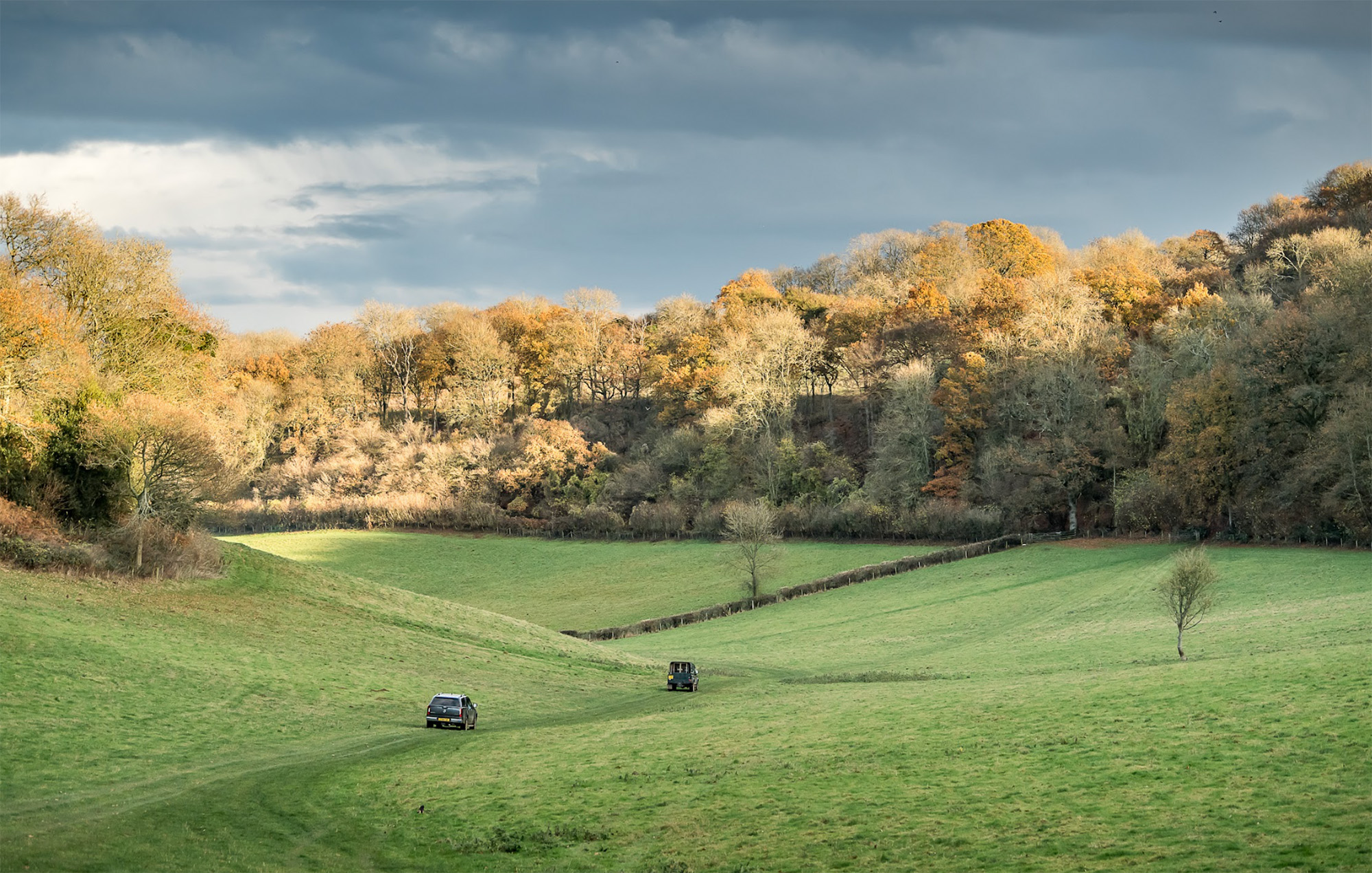
Since 2023, he has been head chef at The Great Bustard in Great Durnford, Wiltshire – a pub kitchen that has become his most defining chapter yet. The Great Durnford Estate serves as his larder: game, lamb, fruit and vegetables from the surrounding land appear throughout the menu, from wood-fired bar snacks to estate venison burgers finished with charcoal mayonnaise. Trout caught on the nearby River Avon makes regular appearances too, brought in by guests and treated with the same respect as everything else that comes through the door.
His approach is built on sustainability and full use of ingredients. Vegetable peels become house ketchup. The landscape leads, and the food follows.
Frequently Asked Questions
Can I make this recipe without a cold smoker?
Cold smoking requires dedicated equipment that keeps the temperature low enough to flavour rather than cook the fish. Without a cold smoker, you can omit the smoking stage and serve the larch-cured trout sliced as a simple cure – the flavour will be different but still worth making. Do not attempt to substitute hot smoking, as this will cook the flesh and change the texture entirely.
What can I use instead of larch needles?
Larch needles are a specific ingredient tied to the estate setting of this dish, but young growth from other coniferous trees – such as Douglas fir or spruce tips – can be used in the cure to similar effect. Both carry a resinous, slightly citrus character that complements the salt and treacle. Use only foliage you can confidently identify, and avoid yew, which is toxic.
Can I use a different fish?
Sea trout or a well-conditioned farmed salmon side will work with the same cure and smoking approach, though the texture and fat content will differ. River trout from a chalk stream, as used at The Great Bustard, has a particular delicacy that suits the larch cure well. Oily fish generally take a cure and cold smoke better than white fish.
How long will the cured smoked trout keep?
Once cold smoked and chilled, the trout will keep for up to three days in the fridge, wrapped tightly. The blinis and crème fraîche are best made fresh on the day of serving.
Related Articles

Recipes
The Great British Game Cookbook
Fieldsports Journal's own 130-page hardback brings together wild game recipes from Tom Parker Bowles, Tom Kitchin, Gill Meller, Vivek Singh and Mark Hix - venison, pheasant, partridge, duck, rabbit, h...
By Ben Palfreyman
Recipes
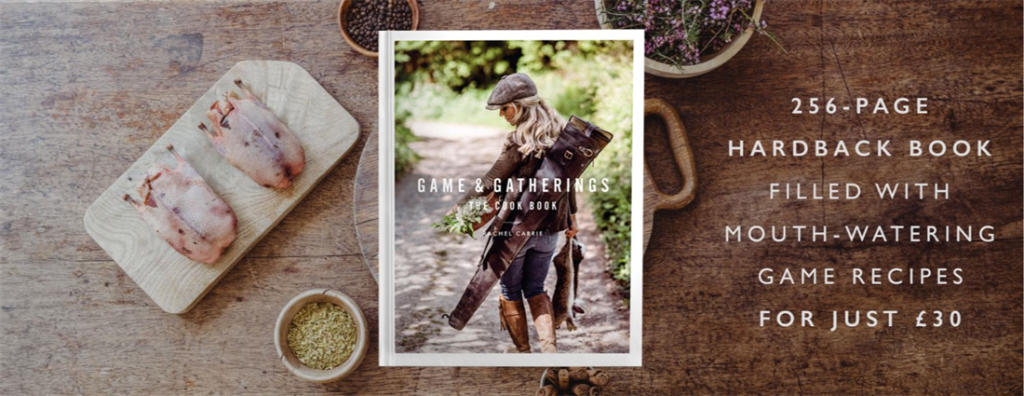
Game and Gatherings cookbook
Treat your loved one with the Yorkshire food writer Rachel Carrie's field-to-fork cookbook brings 57 game recipes to the family table - straightforward, accessible and built around the idea that wild ...
By Fieldsports Journal
Get the latest news delivered direct to your door
Subscribe to Fieldsports Journal
Elevate your experience in the field with a subscription to Fieldsports Journal, the premium publication for passionate country sports enthusiasts. This bi-monthly journal delivers unparalleled coverage of game shooting, fishing and big game across the UK and beyond.
Each issue offers a stunning collection of in-depth features, expert opinions and world-class photography, all presented in a timeless yet contemporary design.
Save 16% on shop price when you subscribe, with a choice of packages that work for you. Choose from Print & Digital or Digital only with each journal delivered directly to your door or via the app every other month, plus access to past issues with the digital back issue library.