- More
-
-
-
 Recipes
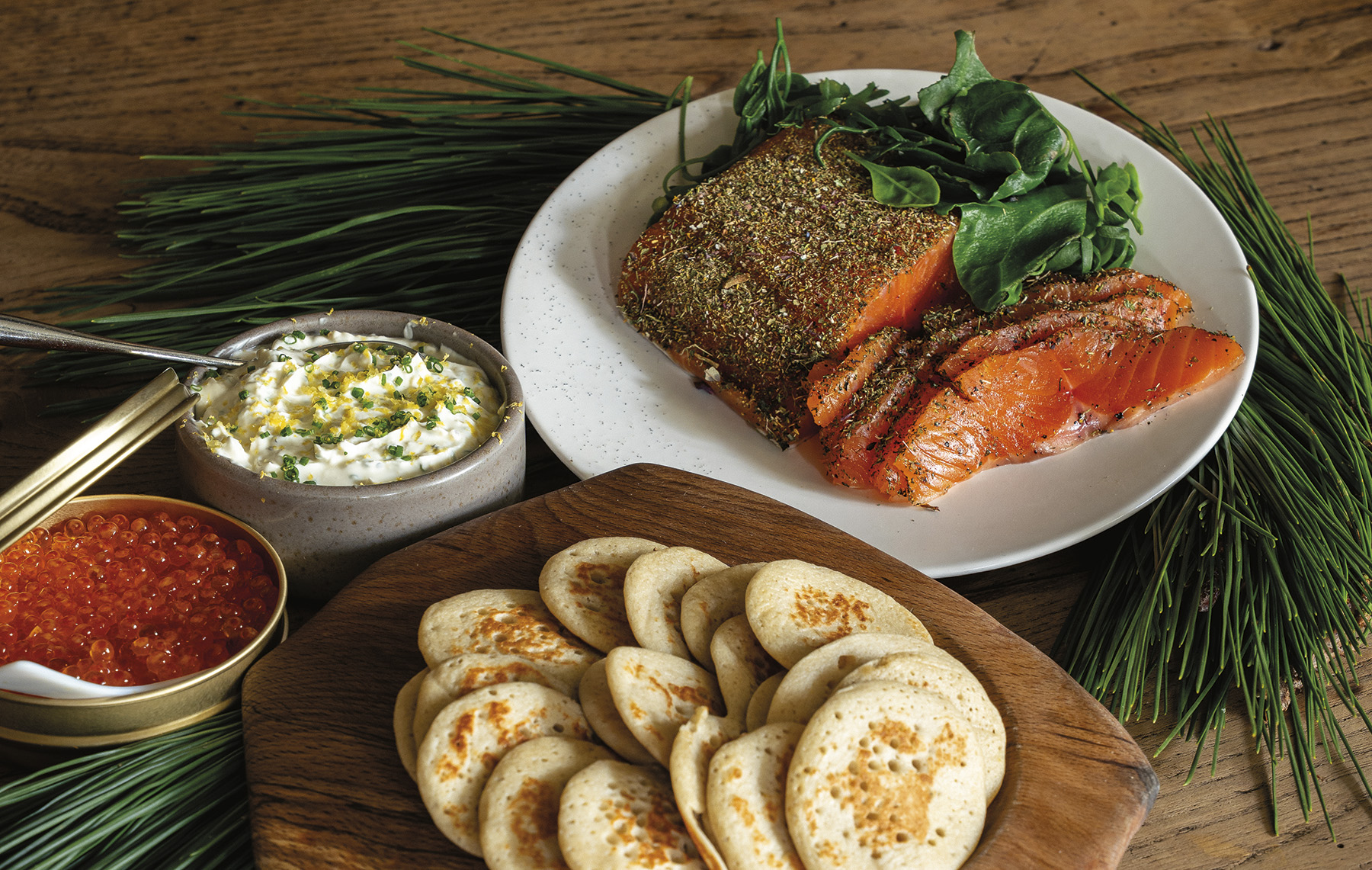
Larch-cured smoked trout with buckwheat blinis and lemon crème fraîche
By Fieldsports Journal
-

-
- No posts selected.
-
-
-
- More
-
-
-
Recipes
Larch-cured smoked trout with buckwheat blinis and lemon crème fraîche
By Fieldsports Journal
-
-
- No posts selected.
-
-
-

Tahr wars
A defining moment of this hunting generation... No hunting problem will ever look the same again. By Peter Ryan
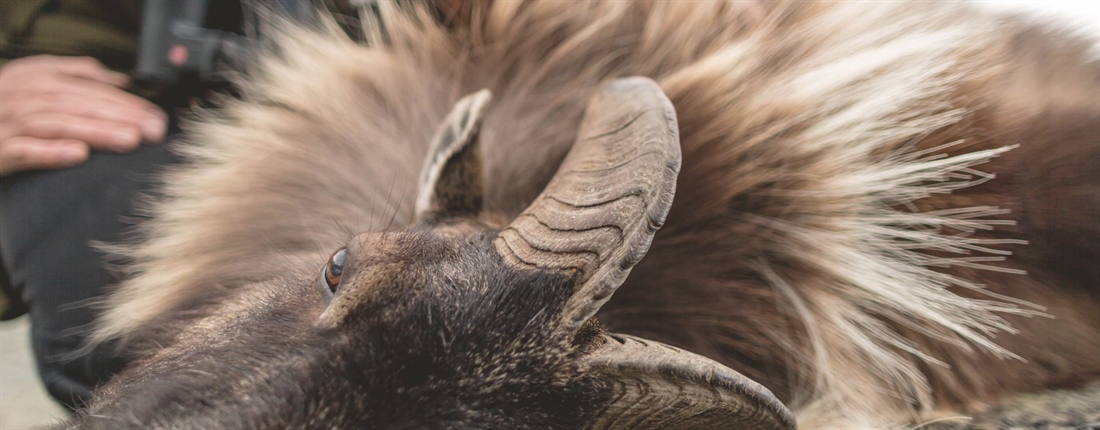

A different age, a bold idea
It is a time beyond our imagination now. Number plates are introduced in Britain as cars are licensed for the first time. The US Army is about to begin digging the Panama Canal, and Herbrand Russell, 11th Duke of Bedford, is quietly planning to do something that nobody has ever done before. The year is 1904.
His goal was to send six Himalayan tahr from the zoological gardens of Woburn Abbey (some only captured in recent times from the highlands of India) to a British colony on the far side of the globe. New Zealand had almost no native mammals – no deer, not even rabbits. Edwardians liked to think big. To reach the South Island of New Zealand the small herd would make the longest journey ever undertaken by an alpine animal.
They left Plymouth on the SS Corinthic, a newly-built steamship of the White Star line. For reasons lost to history the tahr were placed under the care of the ship’s butcher. During the journey one of the bulls escaped and raced around the deck before finally flinging himself into the ocean, the first and only tahr in history to drown at sea. The herd was released at Mt Cook among the snow-capped mountains of the Southern Alps.
The introduction was successful. A second shipment was dispatched in 1909 and by the late 1920s, after a lot of blood, sweat and tears, tahr were well enough established for licensed seasons.
From introduction to industry
In their new country tahr numbers are not controlled by wolves and snow leopard as they are in their native range. People must be their predators. They have become a multi-million dollar industry as a premier game animal for international hunters (who are classed by Tourism New Zealand as ‘high value’ tourists.) Between accommodation, guides, hospitality and other spending, each tahr bull is estimated to have an average worth of $14,000 to the local economy.
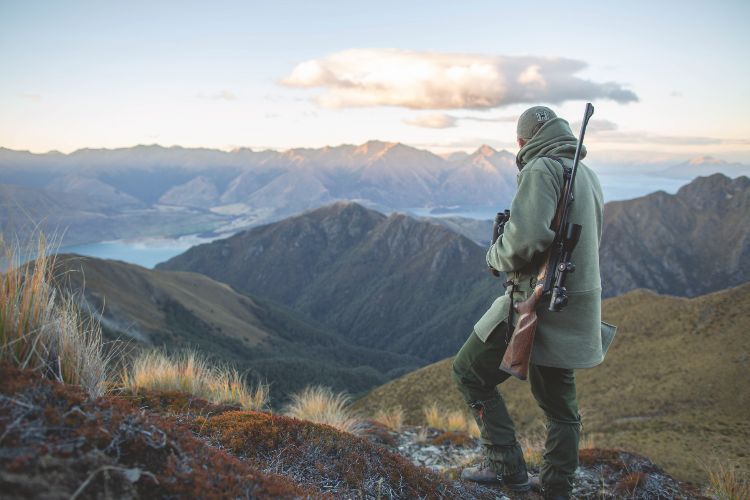
The terrain in which they live is unquestionably beautiful. The mountain slopes seem endless and alpine weather is fickle. This is a game played with top quality optics and if visibility is low the day can be lost. It can be easy or there can be exposed crossings, snow and avalanche risk. A bull that is not cleanly dropped may never be recovered. You can die chasing these creatures. Many have.
A ‘Tahr Plan’ has been in place since 1993. It was an agreement between stakeholders – the Department of Conservation, hunting groups and others with an interest in alpine habitat. The plan set a limit on geographic range and a population number of 10,000 animals.But a lot of water has gone under the bridge since then. On the hunting side the number of guides in New Zealand has increased from a scant dozen or so to 10 times that and more. The number of tahr and the number of bulls being taken has also gone up. And of course their value to both professional and recreational hunters has grown enormously.
Crucially, New Zealand now holds the strongest population of tahr on earth. There are only a few thousand left in their homeland, where poaching and incursion have driven them to near-threatened on the IUCN Red List.
Politics, numbers and a looming cull
New Zealand recently moved to a coalition government made up of Labour, NZ First and the Green Party. This means that the Greens hold a bargaining chip within the new government, enough to snag their candidate a role as Minister for Conservation. It is clear that for many people within the New Zealand green movement all introduced species – including trout and deer – are the enemy, to be eliminated at all cost. This and other anti-hunting policies are already green party ideology in many countries. They only need a balance of power scenario to give them wings.
It’s true that the New Zealand tahr population has slowly increased – but by how much? The guesstimate used by the Department of Conservation used a single sample and extended it over vast areas of habitat (including terrain where tahr don’t live) to arrive at a possible tahr population of 35,000. The margin of error was a whopping 50 per cent.
Based on that estimate the minister set out to cull 25,000 tahr by one means or another. This included shooting virtually all of those $14,000 bulls (not allowed for under the agreed plan and worth an estimated $41 million) and leaving the majority of culled animals to rot.
Then all hell broke loose.
Biologists and gamekeepers will both tell you that margin of error is not an academic nicety. If the actual population is at 88 the lower end of the estimate it would mean that the number of tahr to be shot is greater than the number of animals that actually exist. That’s extermination, not management. The reason offered was that tahr numbers had grown ‘out of control’ and were damaging alpine vegetation. But it is equally clear – by the department’s own admission – that no plant species has ever gone extinct because of tahr.
Critically, the Game Animal Council – the statutory body set up to provide advice on these issues – was not involved in the decision.
A line in the snow
The response from the hunting community both within New Zealand and overseas was staggering. A fighting fund was quickly set up. Donations poured in, many came from ordinary people who understood the principles at stake. At the other end of the spectrum the Dallas Safari Club quickly created a video of support, as did British hunting videographer Byron Pace with a documentary, The Rise and Fall of a Mountain King. In Parliament the opposition quickly attacked the cull as unbalanced.
That fighting fund is currently heading towards $200,000. If needed it will be used to seek a court injunction or to provide protection for tahr using valid population data.
The hunting community made good decisions. At the height of the controversy the minister attended the Sika Show, the biggest game fair in the country. Despite a tense situation she was treated with courtesy and was able to see at first hand the size of the industry she is negotiating with. Hunters were well-behaved and as a group we were able to keep the high ground. In a stunning move, ammunition suppliers across New Zealand refused to supply cartridges for a large-scale cull.
The result was a Dunkirk moment. Make no mistake, tahr were gone for all money on public land until all these steps were taken. But in short order hunters were able to lever the decision back to the table and put their views to the minister in a new management plan.
It has resulted in a string of concessions – reducing the total cull from 25,000 to 10,000 for a start. That 10,000 is to be made up of 6,000 nannies from difficult access areas and the remainder to be taken by hunters, which is close to the normal take anyway. No bulls to be culled and control to be carried out in measured and agreed ways with involvement of hunters. Wild animal recovery operations will be used where possible to utilise meat.
Sadly, on the first day of the cull the helicopter carrying a popular pilot and two departmental control staff crashed shortly after takeoff. There were no survivors. It was a sobering day and all sides agreed to put a hold on further action for the moment. At the time of writing the minister seems to have moved in her understanding of the issues, especially sustainable use of wildlife, and how united the hunting community has become. Her department seems to have accepted the need for proper consultation involving hunting groups. And the hunting community remains resolute and cashed up without any messy PR mistakes.
The final result hangs in the air. The fighting fund remains in place if the concessions are not realised. It’s now a waiting game to lock them into a binding agreement.
However the cards may fall, the result of all this is much bigger than tahr. We were the good guys and we acted that way. It was – and is – the defining moment of this hunting generation. We know how to do this now and no hunting problem will ever look the same again.
We found our voice. I’m so damn proud of us.
FS Footnote – The Duke of Bedford was President of the London Zoological Society for almost 40 years. In addition to his work on tahr he is credited with saving the Père David’s deer from extinction. The species was reintroduced to China from Woburn Abbey stock in 1985.
In May 2014 a statue of a bull tahr was unveiled by Henrietta, Dowager Duchess of Bedford at Lake Pukaki, close by New Zealand’s Southern Alps. The dedication is ‘in recognition of the contribution made by the Dukes of Bedford and the Russell family to the preservation of the Himalayan Tahr internationally.’
This article is an extract from Hunting New Zealand by Peter Ryan; faraway.co
Related Articles
Big game
Inside the historic Oettingen driven hunt
For the first time in its history, the famed Oettingen driven boar hunt opened to outside guests. Simon K. Barr joined the inaugural party to experience a remarkable blend of heritage, wildlife manage...
By Simon K. Barr
Big game
The art of hunting sika
Marc Newton shares his account of a recent hunt for the elusive sika in southern England
By Fieldsports Journal
Get the latest news delivered direct to your door
Subscribe to Fieldsports Journal
Elevate your experience in the field with a subscription to Fieldsports Journal, the premium publication for passionate country sports enthusiasts. This bi-monthly journal delivers unparalleled coverage of game shooting, fishing and big game across the UK and beyond.
Each issue offers a stunning collection of in-depth features, expert opinions and world-class photography, all presented in a timeless yet contemporary design.
Save 10% on shop price when you subscribe, with a choice of packages that work for you. Choose from Print & Digital or Digital only with each journal delivered directly to your door or via the app every other month, plus access to past issues with the digital back issue library.